


The original material was compiled in Russian by Yana Kaziulia and Tatiana Bulanova, founders of B-Long Berlin Creative Experiences, for the lecture on March 8th
Berlin certainly knows a thing or two about the way to celebrate International Women’s Day. On March 8, Berliners honoured the day’s original meaning, with the city resembling a patchwork of various demonstrations (’demos’, as they are known in Germany), bike parades, manifestations and creative meetups.
However, for the rest of the year, Germany maintains its consistent 16% pay gap and 43% gender care gap. Consequently, women still feel that the realisation of the first feminist ideas is far off in the future, as if the last 100 years had never happened.
Making women visible shouldn’t be a one-day event. In the footsteps of Women’s Rights Day, which was officially proclaimed a public holiday in Berlin only in 2019. Let’s take a moment to pay tribute to several Berlin female heroes who paved the way for future generations of girls and women, and who in their day, simply dared to.
Dared to lead the revolution: Rosa Luxemburg
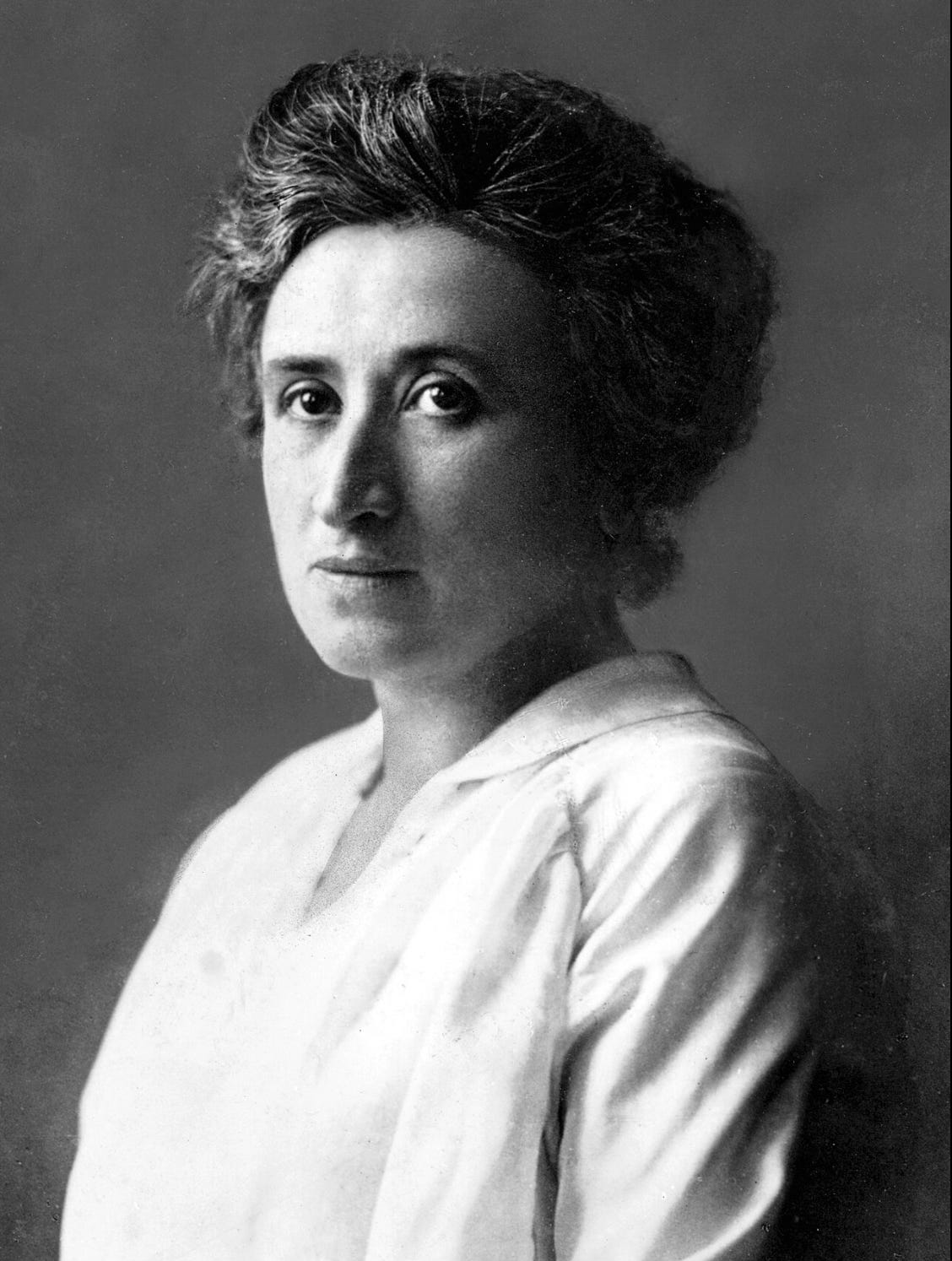
Rosa Luxemburg was a woman of formidable contradictions: a frail, soft-spoken intellectual who became the most feared revolutionary in Europe. Born into a Jewish family in Poland and marked by a lifelong limp, she transformed her physical vulnerability into a razor-sharp weapon of words. After fleeing to Zurich to become one of the few women of her era to earn a doctorate, she entered the male-dominated world of German Social Democracy like a whirlwind. “Red Rosa” was a polemical genius who didn’t just fight the class enemy; she fearlessly challenged her own party’s leadership and even critiqued the Kaiser and Lenin alike. Her life was a relentless cycle of fiery speeches, clandestine editorial work, and repeated imprisonments, fueled by a belief that true freedom is always “the freedom of those who think differently.”
While she and Zetkin solidified the foundation of International Women’s Day and for the uncensored Voting right, Rosa’s ultimate loyalty was to the global proletariat, a devotion that eventually led her to co-found the Communist Party of Germany amidst the chaos of the 1918 November Revolution. Her journey ended in the dark winter of 1919, when she was brutally murdered by counter-revolutionary Freikorps soldiers and her body cast into Berlin’s сanal. Though her life was cut short, her legacy survives as a reminder of a woman who sacrificed everything for a world where humanity and justice might finally prevail.
Dared to dance like noone’s watching: Valeska Gert
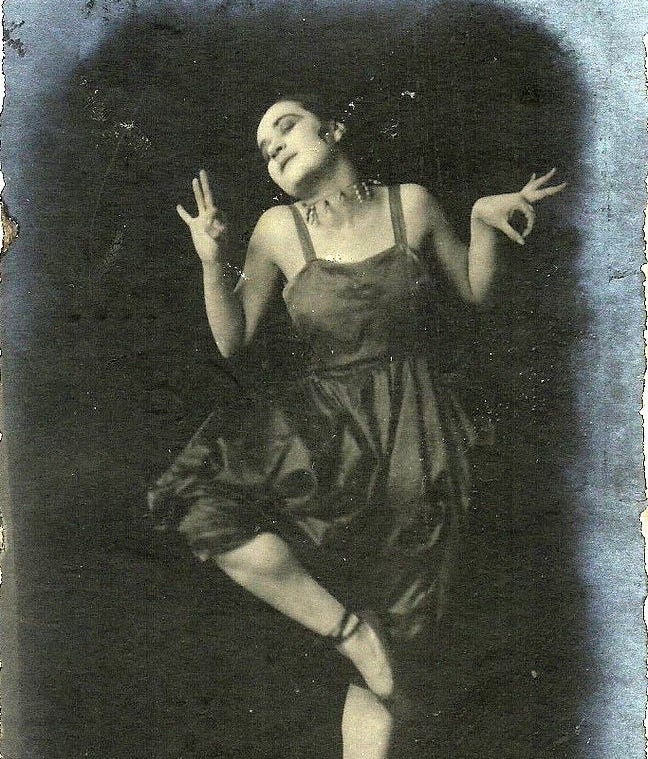
In the 1920s, while traditional dancers sought grace and beauty, Valeska Gert turned the stage into a laboratory of human convulsion. Born into a wealthy Berlin Jewish family, she was a professional observer from childhood, obsessively mimicking the raw emotions of those around her. Her dance was a radical departure from ballet; she replaced flowing lines with tremors, screams, and the stark realities of urban life—playing prostitutes, impersonating politicians, and even imitating the process of dying. She’s been called an expressionist, a pantomimist, a grotesque dancer, a Dadaist, a madwoman. But almost everyone agreed on one thing: there was no dance like this before. She did not just perform; she provoked.Using scandal as her primary medium and finding power in the discomfort of her audience.
The rise of the Nazi regime abruptly ended her German career, labeling her art “degenerate” and forcing her into a penniless exile in New York. There, she reinvented herself by opening the Beggars Bar, a bohemian basement where she famously lured customers by reporting her own establishment to the police as a “spy den” or “an opium joint”. Upon returning to post-war Germany, she remained a jarring presence, staging in-your-face performances about Nazi atrocities long before the public was ready to confront them. Settling eventually on the island of Sylt, she opened her final cabaret, The Goat Shed, and was rediscovered by a new generation of rebels. By the time of her death, her rejection of “pretty” art and her embrace of raw, ugly truth earned her a new title: the “Grandmother of Punk,” a direct inspiration to icons like Nina Hagen.
Dared to stay human in nuclear physics: Lise Meitner
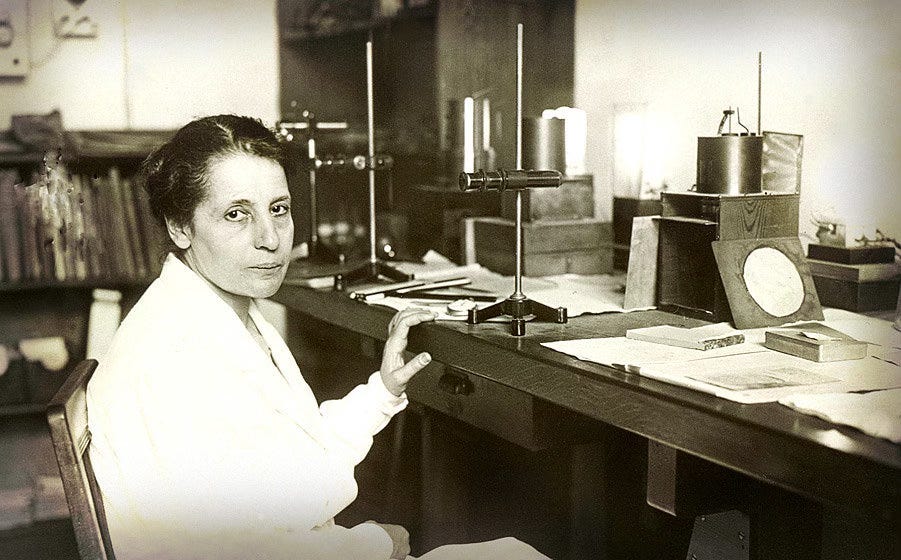
In the progressive yet prejudiced world of early 20th-century Berlin, Lise Meitner rose from working in a makeshift basement laboratory to becoming Germany’s first female physics professor. Despite facing systemic exclusion—at times literally forced to enter the institute through the back door—she formed a partnership with Otto Hahn, leading to the discovery of protactinium and the groundbreaking physical explanation of nuclear fission. However, her journey was severed by the rise of the Nazi regime; as a woman of Jewish descent, she was forced to flee into a precarious exile in Sweden. It was from there that she provided the crucial theoretical insight for fission, yet she was ultimately erased from the Nobel Prize that honored Hahn alone.
Throughout her life, Meitner remained a figure of profound moral clarity, famously refusing to join the Manhattan Project and rejecting the sensationalist title of “mother of the atomic bomb.” In the post-war years, she stood firm against the “moral passivity” of her former colleagues, refusing to provide the “Persil-certificates” used to whitewash their Nazi-era affiliations. Though her contributions were systematically undervalued by the institutions of her time, she is remembered today not just as a brilliant scientist, but as a person of immense integrity. As her epitaph in Cambridge simply states, she was “a physicist who never lost her humanity”—a legacy finally cast in bronze at Berlin’s Humboldt University.
Dared to call herself a doctor: Franziska Tiburtius
While the Prussian authorities were busy decreeing that women were intellectually unfit for medicine due to “smaller brain sizes,” Franziska Tiburtius was proving them wrong one patient at a time. Forced to study in Switzerland because German universities remained closed to her, she came to Berlin in 1877 only to find herself legally barred from calling herself a physician. Undeterred, she hung a modest sign next to her first office: “Dr. med. Zurich University.” Alongside her lifelong friend Emilie Lehmus, she opened a polyclinic for the poor, charging ten pfennigs or nothing at all. She navigated a world where famous scientists like Rudolf Virchow would walk out of a room rather than hear a woman speak, yet she won over the public with her pragmatism and humor—once even charming a satirical editor into ceasing his mockery of “lady doctors.”
Franziska’s legacy is not just one of individual success, but of systemic change. She understood that for women to truly enter medicine, the entire educational pipeline had to be rebuilt. She helped establish the first high-school courses for girls that led to the high school diploma, finally forcing the state to allow women into medical exams by 1898. By the time she passed away in 1927, she was surrounded by a generation of female surgeons and specialists who no longer had to enter their profession as guests. She died at 84 in the same clinic for women she had opened, having lived a life she claimed she “would not trade for any other.”
Dared to travel around the world at the dawn of car era: Clärenore Stinnes
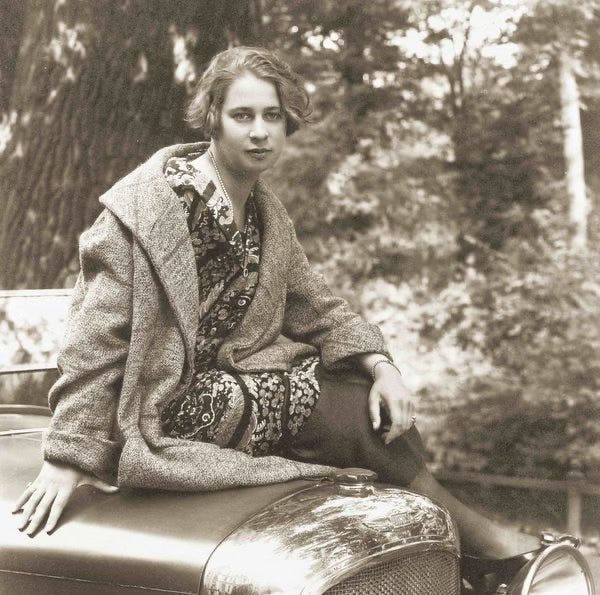
In 1927, when the automobile was still a fragile luxury and paved roads were a rarity, twenty-six-year-old Clärenore Stinnes made an unthinkable declaration: she was going to drive around the world. As the daughter of Hugo Stinnes, one of Germany’s most powerful industrial tycoons, she was raised in a world of massive scale and ambition. Yet, after her father’s death, the era’s rigid gender norms barred her from leading the family empire. Refusing a life of quiet domesticity, Clärenore took her inheritance of iron and coal, forging it into a new identity behind the steering wheel. With 17 racing victories already under her belt, she secured corporate sponsorships and set off from Frankfurt in an Adler Standard 6. She was determined to prove the endurance of German engineering and her own adamant will.
The two-year odyssey that followed was less a road trip and more a brutal battle against geography itself. Accompanied by Swedish cinematographer Carl-Axel Söderström, Clärenore navigated the frozen, cracking ice of Lake Baikal, the trackless sands of the Gobi Desert, and the thin air of the Andes, where they used dynamite to blast paths through the rock. Along the way, her crew dwindled and her relationship with Söderström evolved from formal friction to a partnership “made of steel.” By the time they returned to Berlin in 1929—having covered 47,000 kilometers—they had achieved a feat of human and mechanical endurance that caught the attention of even Henry Ford. Despite her global fame, Clärenore eventually chose a quiet life in Sweden with Söderström, rarely looking back at her pioneering achievement. She remained a woman who throughout her long life always looked forward, leaving the world a smaller, more reachable place.
Dared to be poetic af: Else Lasker-Schüler
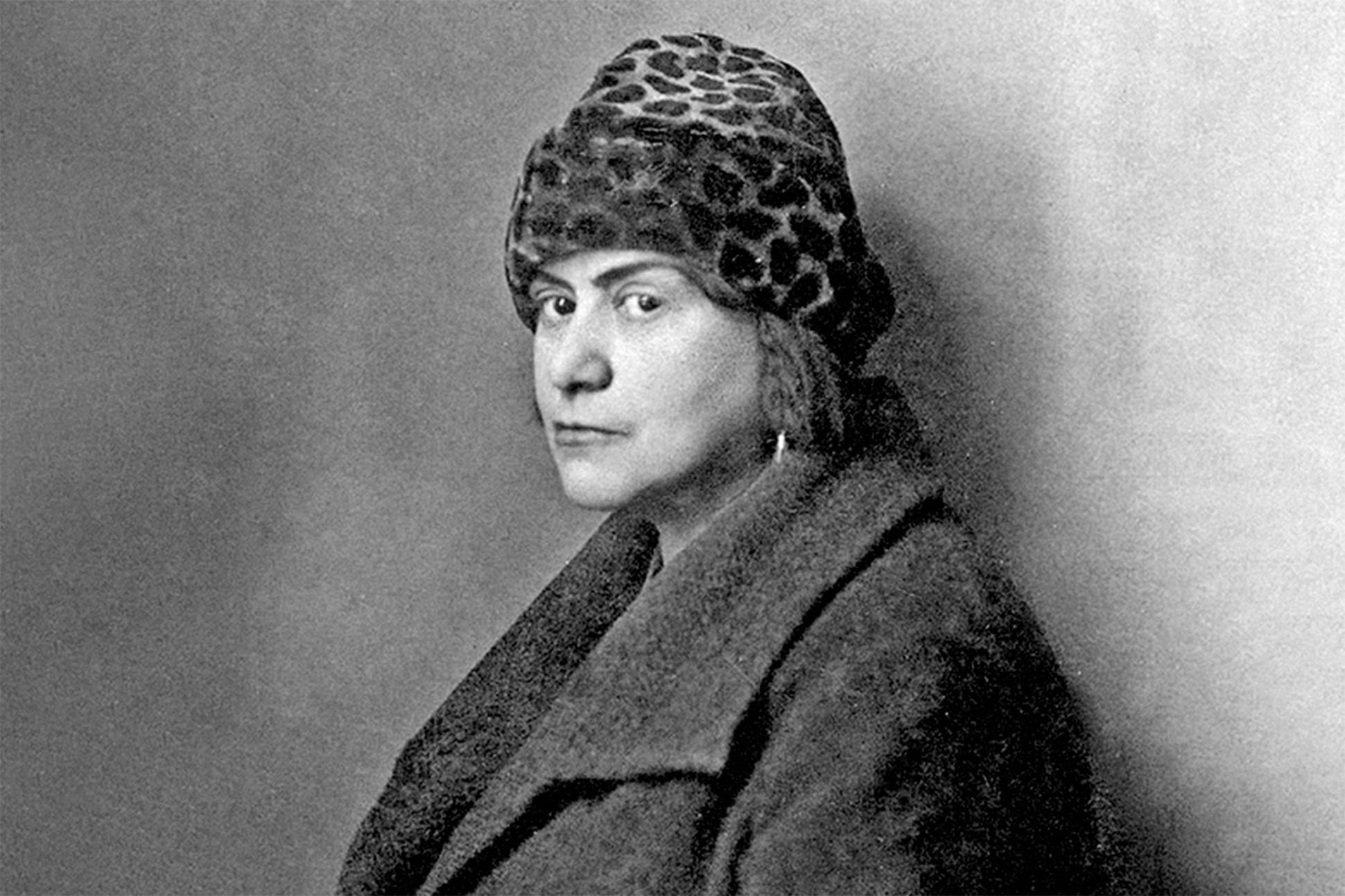
Else Lasker-Schüler did not merely write poetry; she inhabited it. A central figure of the Berlin avant-garde, she was unmistakable on the streets of Schöneberg with her jet-black bowl cut, flamboyant harem pants, and a neck draped in layers of shining jewelry. To the world, she was a bohemian eccentric; to herself, she was Prince Jussuf, a forever young oriental royalty out of a mystical fairy tale. This alter-ego was not a mask, but a reality she used to navigate two failed marriages and a life often spent on the brink of starvation. She traded verses along with hand-painted postcards with icons like Franz Marc and Gottfried Benn, inventing secret nicknames for her friends and creating a poetic language so personal and cosmic that it defied the rigid materialism of her time.
Despite her whimsical persona, Else’s life was marked by profound tragedy. Her radical drama, Die Wupper, exposed the jagged soul of the industrial working class, while her masterpiece poem, “An Old Tibetan Carpet”, wove human souls into the very texture of the universe. The 1920s brought her the prestigious Kleist Prize but also the devastating loss of her son, Paul, to tuberculosis. When the Nazis rose to power, the “Theban Prince” was forced into an exile, eventually finding herself stranded in Jerusalem as World War II broke out. Even there, as her health faded, she continued to write, envisioning a world where even Mephistopheles would repent in the face of Hitler’s atrocities. She died in 1945, a “citizen of Thebes” who proved that strong sensual poetry could survive in the flames of the world’s collapse.
