


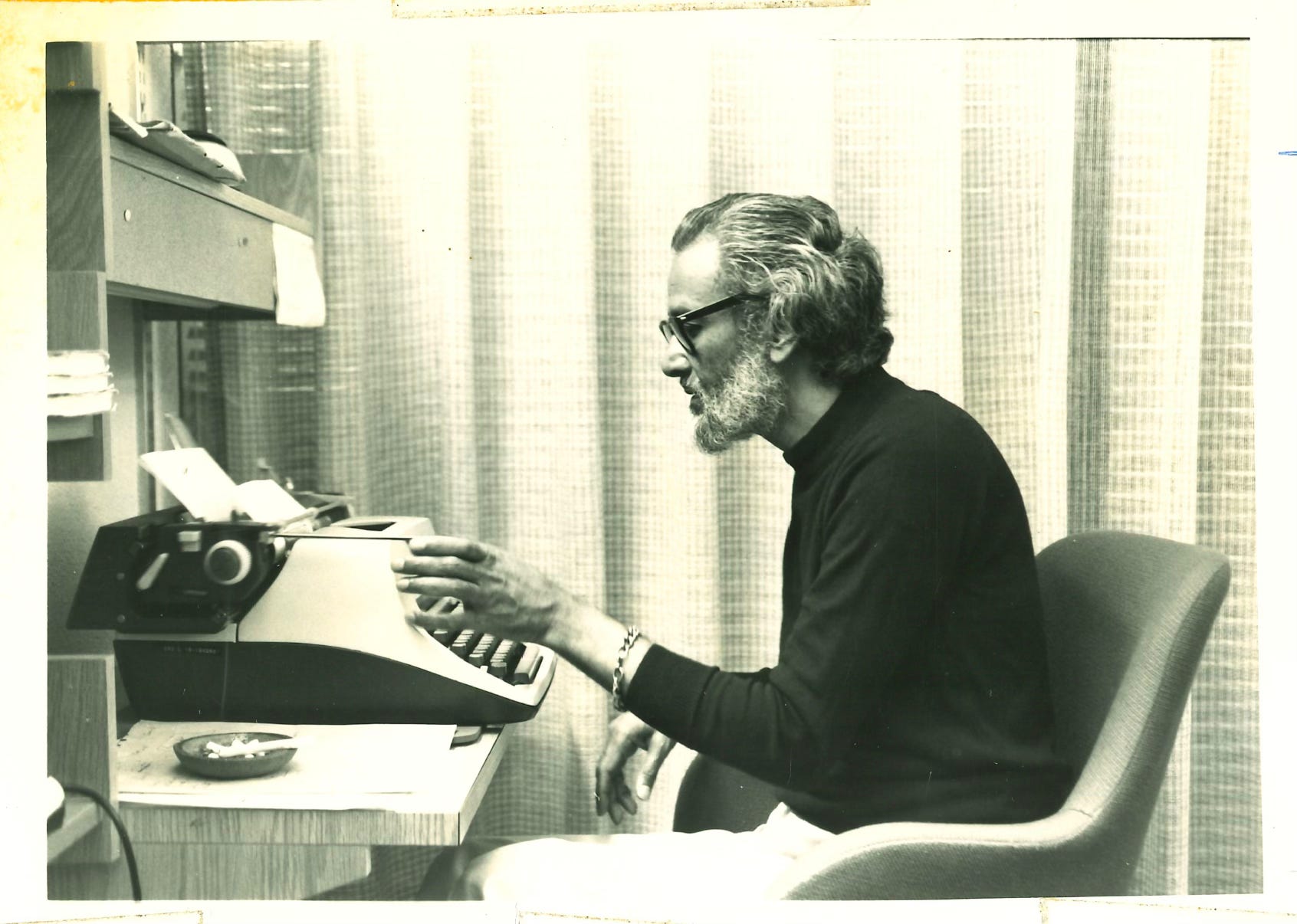
Mental health in the 1950s was not taken as seriously as it is today. It was often regarded as a form of lunacy or defect, and individuals experiencing mental illness were typically institutionalized in asylums, where they received treatments such as electroconvulsive therapy (ECT) and early psychotropic medications (Kousoulis). Though some antidepressants had emerged during this time, specifically iproniazid and imipramine, they were still relatively new. Iproniazid, initially developed to treat tuberculosis, was discovered to have mood-lifting effects, while imipramine became the first tricyclic antidepressant (López-Muñoz).
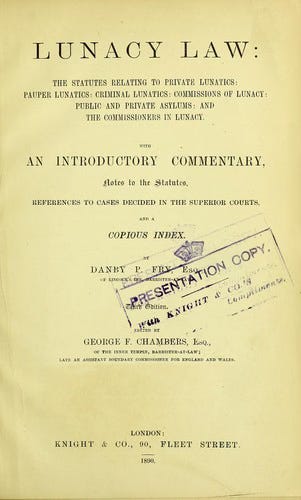
To continue, mental health itself went through a series of acts within the world of law and medicine before Sam Selvon published his novel, Lonely Londoners. Going back to 1890, when the Lunacy Act was established. According to the National Library of Medicine, this act established legal control over psychiatric admissions, requiring only two medical certificates signed by qualified medical doctors for admission to lunatic asylums. Still, the Act required an additional ‘reception order’, generally referred to as ‘legal certification’ (Takabayashi) and helped to make sure that people were not wrongly confined within an asylum. Many psychiatrists were not on board with this because “they thought the Act deprived them of their authoritative position in mental health services, particularly through the introduction of legal certification and suspension of licensing of new private asylums” (Takabayashi). This is because private asylums were the most profitable in the psychiatric economy.
A journal article from the British Medical Journal goes into how, 40 years later, the Mental Treatment Act was established in 1930. This act had reorganized the Board of Control. The Board of Control for Lunacy and Mental Deficiency oversaw the treatment of the mentally ill. And just 18 years later, the National Health Service was established. This service involved the first health system to offer free medical care to the entire population.
People of color were usually those deemed more frequently as mentally insane due to the way those in power saw them as inferior. Walter A. Adams writes about how therapists should treat patients of color. Saying things like, “[The] therapist must learn to be careful in his choice of words and learn to avoid seemingly harmless phrases” and continues with an example that “a therapist who refers to Negroes as ‘you people’ or ‘your people’ calls attention to his own differences and makes the Negro patient suspicious, wary and fearful of being patronized.”
Displacement
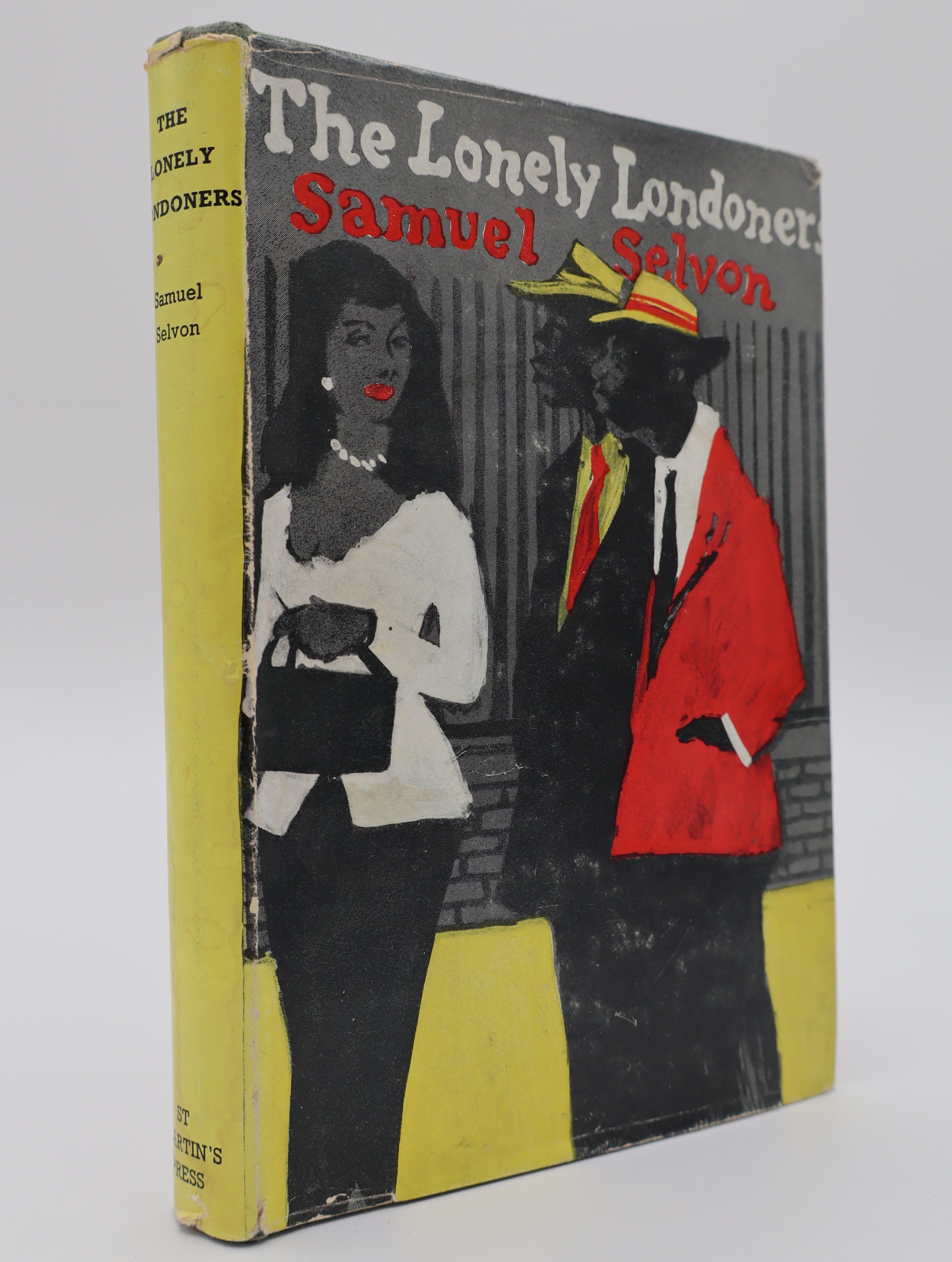
Sam Selvon was born in 1923 in San Fernando, Trinidad, West Indies. He died in 1994 in Trinidad. He had moved to London in 1950 and lived there for six years before publishing The Lonely Londoners (Dawes). He takes his own personal experiences and writes them into his novel, as the main character, Moses, is also a Trinidadian man who moved to London. Through the novel, the reader can see and feel the sense of displacement, loneliness, and melancholy with the characters as they go through their lives in London as immigrants. Specifically, black Caribbean immigrants in the 1950s.

Moses is Selvon’s main character, who goes through the lives of every other character met within the novel. The audience first meets him at a station, waiting for Galahad to come to London for a friend. Moses is the man everyone goes to when they are coming to London, or if they need a job. Though, he is barely afloat. His sense of isolation is felt while he is waiting for Galahad, “For the old Waterloo is a place of arrival and departure… Perhaps he was thinking is time to go back to the tropics, that’s why he feeling sort of lonely and miserable” (Selvon 1).
Moses is unhappy throughout the novel. He is the man everyone goes to for help, but he has no one to go to when he needs it. Even though he longs for it, “Sometimes during the week, when he come home and he can’t sleep, is as if he is hearing the voices in the room, all the moaning and groaning and sighing and crying, and he open his eyes expecting to see the boys sitting around” (Selvon 12). These thoughts are what lead him to consider going back to Trinidad.
Akram Al Deek wrote the book Writing Displacement: Home and Identity in Contemporary Post-Colonial English Fiction, and says, “that distance can provoke a nostalgic national consciousness…nationalism ‘affirms the home created by a community of language, culture, and customs; and by doing so, it fends off exile, fights to prevent its ravages” (p. 60). This ties in with the psychological basis of what Moses is going through. This author also says that “[the] need for a reconstruction, a translation, or a reconfiguration becomes a necessity because melancholy (a persistent mourning) over a lost past keeps the displaced distant from the moment of now and here” (p 58). This fully translates to Moses and his constant anxiety of the past and future, and lack of a present. He does not live in the now and worries about how he has not done anything with his life.
He cannot go back home, though, because just like when immigrants move to America, being promised the American dream, Moses was promised the dream life in London. This disillusionment is also where his depression stems from and is why he cannot face his family or failure, but Moses is stuck in an endless loop of survival and welcoming new immigrants to London. He is repeating the same things and has little to reflect on. As he notes, “I don’t know these people at all, yet they coming to me as if I is some liaison officer” (Selvon 2). Though he plays the role of guide and supporter, this only deepens his emotional exhaustion with people and London.
Altogether, Moses’s depression and anxieties are not just a personal struggle but emblematic of the broader postcolonial immigrant experience. It speaks to a collective trauma of displacement and the burden of living between worlds, where the past is mourned, the future feared, and the present, empty.
Family
Tolroy is a character also from the Caribbean, although where he is from specifically is never stated. He is one of Moses’ friends who is first met at Waterloo Station, as he is waiting for his mother to get to London. He is initially nervous about his mother coming to London. Which is shown when he is talking with Moses and says, “’Boy, I expect my mother to come,’ Tolroy say, in a nervous way, as if he frighten at the idea” (Selvon 5). Moses has a hard time just supporting himself throughout the story; we can imagine that Tolroy may be struggling as well, but he is taking on the responsibility of his mother as well.
Lo, and behold, his mother had decided to bring his aunt Tanty, cousin Lewis, Lewis’ wife Agnes, and their children. His mother brought them upon hearing about his earnings and decided that London could not be much different compared to their home, and that Tolroy could support them all. This is shown with his mother’s answer, “‘All of we come, Tolroy,’ Ma say. ‘This is how it happen: when you write home to say you getting five pounds a week Lewis say, ‘Oh God, I going England tomorrow” (Selvon 9).
Tolroy’s earnings, while impressive to his family, are not enough for a family in London to live off of. Showing a lack of knowledge on how the real world works, they continue to stress Tolroy out: Tanty not knowing how London works, Lewis treats his wife terribly, and when she leaves, he burdens his issues onto Tolroy.
His mother, bringing his family with her, has added more people to his personal space and free time, and they see him as the one who bears their burdens. Anyone who is losing not only financial stability but also their autonomy would not only feel stressed but also be emotionally exhausted. This is evident when Tolroy has had enough and tells Tanty he is tired of Lewis asking him where Agnes has gone. He is frustrated that his whole family has come when he sent for only his mother. He reminds Tanty that they are no longer living in Jamaica, and that London is a very different place. He is facing unnecessary and unexpected responsibilities, which further highlights a kind of burden and isolation placed upon immigrants. His family has that “immigrant dream” that brought Moses and Tolroy, but as both have been there for years now, they have woken up to the frustrations and cultural differences between the two countries.
Optimism
When Sam Selvon introduces Moses, he also introduces Galahad, or Henry Oliver, as the person Moses is meant to meet. Galahad arrives in London with almost nothing (“What luggage? … When I start a work I will buy some things.”(Selvon 13)), which shocks Moses. He is fresh-faced and ready to work, as if nothing could frighten him. This is similar to how Tolroy’s family comes to London, believing that Tolroy can take care of them. Galahad views life with optimism and aims to live in a way that exhibits resilience, as if nothing can touch him. But then he eats a pigeon. He eats a pigeon because he is hungry, he is broke, and he is out of ideas. He is in the park and decides to catch a pigeon, as they are everywhere, and brings it back to Moses. As Moses tells him that he can’t just take birds from the park like in Trinidad. This shows a breaking point, a complete psychotic break, and his disillusionment with London is broken. Galahad had what everyone else had: a reality check. Moses knew this would come because he had seen it countless times with other men whom Moses was asked to guide around London and be shown the ropes; it was also something Moses had.
Sex and Race
In The Lonely Londoners, Sam Selvon offers a sharp critique of the racial and social prejudices that interracial couples faced in 1950s London, particularly through the experiences of characters like Galahad. Although interracial relationships were not illegal, they were heavily stigmatized, and public opinion often turned hostile. This is reflected in Ashley Dawson’s essay “In the Big City the Sex Life Gone Wild”: Migration, Gender, and Identity in Sam Selvon’s The Lonely Londoners, where she describes a scene involving a Swedish woman and her Jamaican husband. Their argument escalates when bystanders intervene under the guise of protecting the woman, but when she defends her husband, she becomes the new target, condemned for being married to a Black man. Similar dynamics play out in Selvon’s novel, where characters like Galahad, Cap, and Bart date white women for different reasons. While Galahad seems to genuinely enjoy his relationship and sees it as a sign of belonging in his new environment, Cap is more opportunistic, often relying on white women for financial support. Bart, meanwhile, is driven by a desire to improve his social standing through these relationships.
Galahad’s experience is especially telling. He is proud to be with a white woman, takes her to shows, and even visits her family, believing there is nothing wrong with their relationship. However, when her father discovers their romance, he erupts in fury and physically chases Galahad out of the house. This becomes a pivotal moment for Galahad, one in which his earlier optimism begins to erode as he is forced to confront the harsh realities of racism in Britain. Even earlier, a seemingly innocent moment, when Galahad playfully covers his girlfriend’s eyes from behind, elicits horrified reactions from onlookers. But it is the violent rejection by her father that truly shatters Galahad’s illusion of belonging. As Dawson points out, relationships between Black men and white women in the novel are not merely personal; they are politically and socially charged, reflecting how Black male desire is constantly policed and pathologized by the white majority. These personal encounters ultimately highlight one of the novel’s central themes: the painful dissonance between hope and reality for Black immigrants trying to find identity, love, and acceptance in a deeply prejudiced society.
Modernism
Sam Selvon attempts to hold a mirror to the world and how they were treating people like him who just wanted a life different from at home. Many immigrants were treated as unwanted, inferior, dirtier, among other things. Modernist writers liked to show their world how they were treating their people. One would think that “realism” would be a better way to show the world its true horrors but Laura Winkiel states that “as for many modernists, the real world is too fragmented, irrational and chaotic to be mirrored by realism” (22). She says before that “facts, evidence, and narrative causality are hallmarks of realism, a literary and painterly technique, that attempts to imitate a rational, empirical experience and knowable social world” (22). Except that the world does not make sense and is not easily rendered in a way that is true to the point of “what you see is what there.” A different method that she mentions is the ‘mythical method’, which “’ is a step toward making the modern world possible for art’ (178)” as she quotes on page 22. She continues on to say that “myth provides form, a way of shaping the complexity, scale and diversity of the modern world into something recognizable” (22). Selvon knows that the world cannot be rendered in a “realist” way, and that is shown through his work. A way he showed this was through melancholia. Melancholy, by definition, means the feeling of sadness. In a modernist context, it becomes more grey and less definite on what the definition is. Sanja Bahun speaks at length about melancholia and its origins with Freud. He also says that “[the] most significant among them are the blurring of boundaries between the subject and the object, and the consequential impossibility to identify loss” (Bahun). Bahun continues to say that Freud claims that “Melancholia…may develop around the loss of a social abstraction such as ‘fatherland’ and ‘liberty,’ or around the loss of an actual individual (SE XIV: 243; 245); it can be triggered by loss, or intimation of loss, of an idea or a whole system of symbols” (Bahun). All our characters in The Lonely Londoners experience a loss of their “fatherland”, in the case of Moses, or “liberty”, in the case of Tolroy.
Conclusion
Sam Selvon wrote a deep criticism of how black immigrants were treated in 1950s London and held a mirror to the reality of racism and the mental horrors that they went through during that time. Moses was Selvon’s main character who struggled with the idea that if he were to go home, he would face the disappointment from his family and the failure of accomplishing anything withstanding. Tolroy has to shoulder the burdens of his family following him to London because he is doing good in the standards of their home country compared to how they were doing there. Not realizing that doing well on their standards was not the same thing as doing well on London’s standards. He has to carry the guilt of feeling burdened by his family, but also has to carry the weight of their ignorance and financial burdens. Finally, with Galahad, the loss of dreams and the disillusionment of a world that was supposed to have streets made of gold. Galahad represents those who expected great things to come for them after they immigrated to London, and ultimately failed.
Edited by Lottie Bowden
Works Cited
Adams, Walter A. “THE NEGRO PATIENT IN PSYCHIATRIC TREATMENT.” American Journal of Orthopsychiatry, vol. 20, no. 2, 1950, pp. 305–10, https://doi.org/10.1111/j.1939-0025.1950.tb06041.x.
Al Deek, Akram. Writing Displacement : Home and Identity in Contemporary Post-Colonial English Fiction. 1st ed. 2016., Palgrave Macmillan US, 2016, https://doi.org/10.1057/978-1-137-59248-4.
Bahun, Sanja. Modernism and Melancholia : Writing as Countermourning. Oxford University Press, 2014.Dawson, Ashley. “‘In the Big City the Sex Life Gone Wild’: Migration, Gender, and Identity in Sam Selvon’s The Lonely Londoners.” Mongrel Nation: Diasporic Culture and the Making of Postcolonial Britain, University of Michigan Press, 2007, pp. 27–48. JSTOR, https://doi.org/10.2307/j.ctv3znzng.5. Accessed 6 May 2025.
Dawes, Kwame S. N. “Samuel Selvon: History: Research Starters: EBSCO Research.” EBSCO, 2022, www.ebsco.com/research-starters/history/samuel-selvon.
Kousoulis, Dr Antonis. “Our History and Future: 70 Years of the Mental Health Foundation.” Mental Health Foundation, 15 July 2019, www.mentalhealth.org.uk/explore-mental-health/blogs/our-history-and-future-70-years-mental-health-foundation#:~:text=In%20the%201950s%2C%20ignorance%20about,no%20incentive%20to%20treat%20it. Accessed 09 Apr. 2025
López-Muñoz, Francisco, and Cecilio Alamo. “Monoaminergic neurotransmission: the history of the discovery of antidepressants from 1950s until today.” Current pharmaceutical design vol. 15,14 (2009): 1563-86. doi:10.2174/138161209788168001
“Mental Treatment Act, 1930.” The British Medical Journal, vol. 2, no. 3637, 1930, pp. 139–41. JSTOR, http://www.jstor.org/stable/25337378. Accessed 6 May 2025.
Rivett, Geoffrey. “1948–1957: Establishing the National Health Service.” Nuffield Trust, www.nuffieldtrust.org.uk/chapter/1948-1957-establishing-the-national-health-service. Accessed 6 May 2025.
Takabayashi, Akinobu. “Surviving the Lunacy Act of 1890: English Psychiatrists and Professional Development during the Early Twentieth Century.” Medical History, U.S. National Library of Medicine, Apr. 2017, pmc.ncbi.nlm.nih.gov/articles/PMC5426304/.
