


I never thought of the area where I live as too urban, or to be lacking in green spaces. I was raised in the South of England, by parents who found it vital that my younger sister and I spent our childhoods in local nature as much as possible - so that we would learn from it, and grow to care for and protect it as we grew into adults. I was lucky enough to live close to both the sea (Bournemouth’s expansive coastline) and also a sizable area of the New Forest only a twenty minute drive away, alongside various park and river walks only a stones throw from our front door. I never really paid attention to the keep out signs, the barbed wire separating me from stretches of empty green fields. I was quite content sticking to the paths.
I’m not sure what it was about my morning walk today that shifted my perspective. I didn’t have my headphones with me, my phone was in my back pocket, untouched. I was bathing in the nature surrounding me as I walked, listening to birdsong and the wind whistling through the trees. I was walking along a fairly narrow stone path, higher up from the riverbank pathway on my left, which was closed off due to flooding, and had been for the majority of the month. My gaze turned to my right: a vast, green field, lush and primed for agriculture or farming or whatever use it had. In the distance, just on the edge of this field and totally isolated, was a barn and farmhouse that looked more or less abandoned, the perfect setting for an apocalyptic survival movie, I thought briefly. The more I walked, the more I stared, and the more I thought - so, so much land, serving a purpose unknown to me, and totally inaccessible to anyone who didn’t have the ‘right’. The narrow path I walked was segregated from the rest of the landscape by barbed wire. And all of a sudden, it occurred to me how hostile this once quaint landscape had become, all from the work of a few strategically placed fences.
By any stretch, I am adequately privileged in the amount of walks, forests and fields that I do have access to so close to home; so many across the UK are not so lucky. In fact, the 8% of England (statistic from Right to Roam) that the public do have access to is mostly largely detached from civilisation: mountain ranges, expansive moors, in the deepest hearts of infinite forests. Not exactly somewhere you can go for a quick, peaceful dog walk. Furthermore, the places you can go in your local area have even more restrictions applied: these paths are for walking only. No kayaking down the river (something I did as a child with my father at our local river which has since been banned), no cycling, no camping or picnics, don’t let your dog off the lead. And whilst these rules have been put in place to protect local nature from people who don’t care for it as much and will treat it poorly, it also stops the vast majority of people from doing more than just passing through a green space; interacting with it. Being in it.
Two writers whom I treasure, Wyl Menmuir and Guy Shrubsole, have both spoken on this issue in their separate novels: The Heart of the Woods (Menmuir) and The Lost Rainforests of Britain (Shrubsole). Within these beautifully poetic yet scientific and relevant non-fictions, each contains a chapter dedicated to ‘peaceful trespassing’ and the ramifications they encountered from doing so. Essentially, going on a walk beyond a ‘Private land’ or ‘no entry’ sign, for no nefarious reason, just to wander through the land you belong to, and not being afraid of facing the consequences of an angry, wealthy landowner who doesn’t like to share. And if you’re thinking that these restrictions surrounding public and private land feels political, that’s because it is.
1% of the wealthy own 50% of England’s landscapes. That is a statistic that is so outrageous to me, so baffling, that I had to fact check it from several sources. But just like most things that you hear about the ultra rich, it’s true, and it’s a means for the wealthiest of Britain to have total control and ownership of our land, essentially making the majority of the public, visitors in our own country. Because how many nature reserves, sections of forest, open fields, do you have to pass a fence through to access, or question whether it’s ‘legal’ to even go through in the first place? All in the name of privacy and land ownership, but nature is meant to be walked in, meant to nourish us, meant to allow us in so we can protect and preserve each other. Not kept locked away behind electric wire.
Walks in green spaces and being close to nature is still one of the top natural ‘cures’ for mental illnesses as preached by the professionals, so imagine the contradiction when it’s those same people in power who are restricting the average man’s access to said green spaces just to benefit those same landowners, to keep them happy? It’s no coincidence that England ranks bottom both in nature connectedness and nationwide mental health. This is becoming more and more of a social and political issue. And of course, I’m not talking about treasured institutions like The National or Woodland Trust, who dedicate their budgets to protecting and preserving some of the most beautiful locations in the country whilst still allowing people to visit. Yes, there are memberships and fees involved with accessing these areas, but that’s for a reason; these areas are fragile, potentially under threat, or perhaps just haven’t had much exposure to humans and the Trusts intend to keep it that way. Wildlife needs to be protected, especially when we already have so little of it left. I’m talking about landowners who buy acres of land just because they can, and then keep it off limits to literally everyone else. Why? Who knows. Maybe they just don’t like people, or they’re plotting world domination from the heart of their estates and don’t want anyone getting too close. The more I learn about the world and its inhabitants, the less it surprises me.
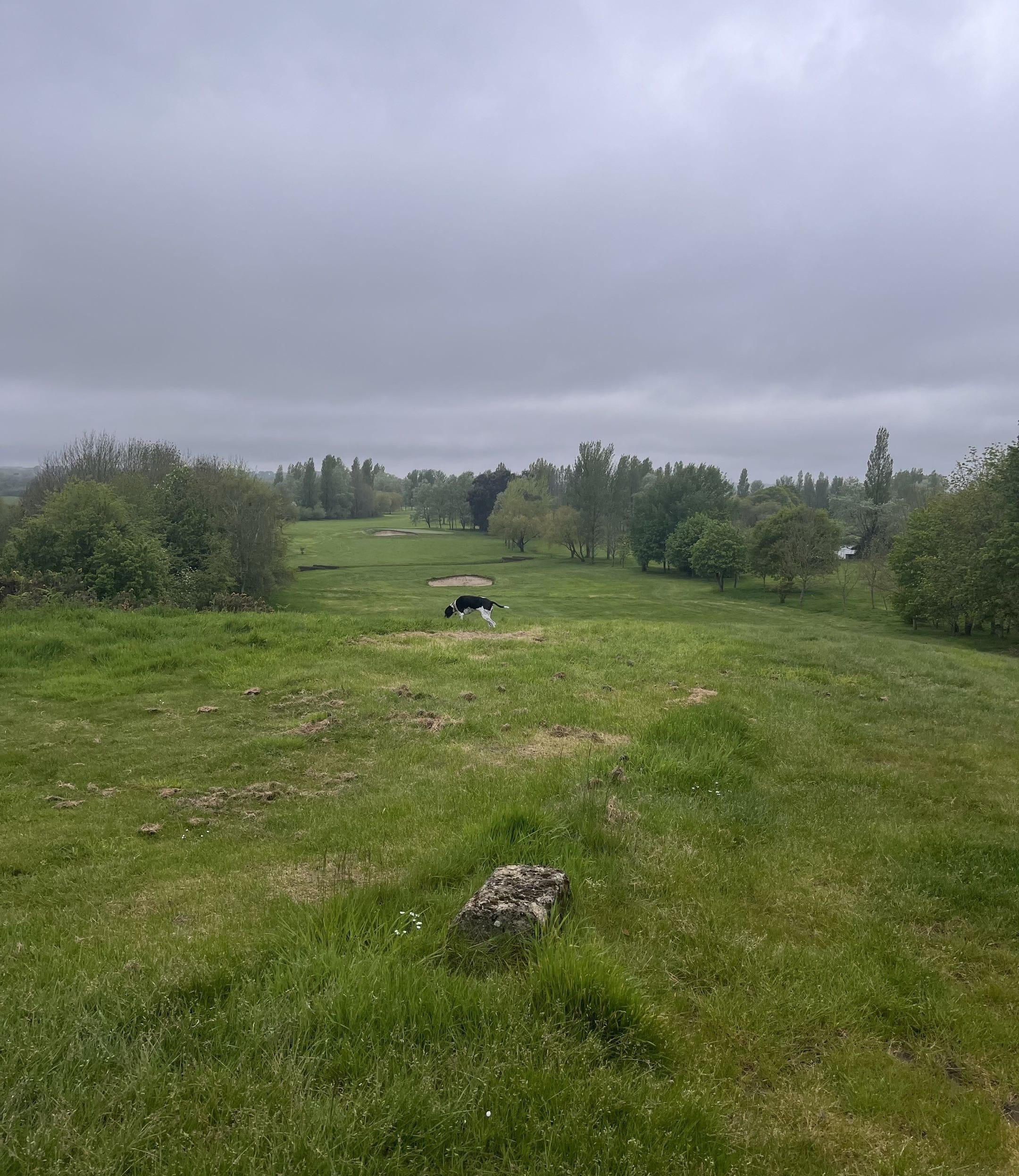
I have experienced this spoiled hostility myself. Walking with my parents one early misty morning through an abandoned golf course that had been sold to a company who planned to raze the land and build flats on top of it. A shame, because in the absence of rich, loud golfing parties, the land had flourished into a haven for wildlife. Deer, swans, rabbits, birds of prey, could be seen like hallucinations through the fog as we walked with our two well behaved dogs, all of us taking in the nature we so rarely got to see like this. That is, until, a shout from our right and a Barbour clad figure emerged from the mist some 50 metres away. “You can’t walk here! Path is that way.” Blunt. Final. ‘Get off my land’ in a mildly less aggressive tone. We did as we were told, albeit my Dad muttering and swearing the whole way about being told off like a naughty schoolboy, and no sooner had we made it on to the path that was fenced off from the golf course haven, did we see three other figures appearing from different areas of the field to join the first, all of them staring at us obviously, from a distance, as we walked off. They had been watching us the whole time.
Realistically, if a large group of people walked onto private land and made a big, peaceful day out of it, said landowner couldn’t walk out his front door with a rifle and start shooting at everyone. That would be murder, and would end very badly for him. But that’s still a real threat, even in England where gun ownership is scarce. The only thing he could do, really, would be to call the police, who most likely wouldn’t show up for a few hours, giving said protesters plenty of time to scarper. Putting it like that sounds so silly; so much fuss over where you can and cannot walk!
Another point worth making is how these green spaces are so tightly entwined with our country’s history and culture. The sacred art of rambling, of rural festivals and rituals has been an innate part of England’s historical culture for centuries. And with green spaces and access to our gorgeous forests dwindling, those traditions are dying out, rapidly, simply because people do not have interest in the things they do not have access to. Rural pubs and businesses are suffering, parts of our countryside staying largely unexplored all because we are losing more and more access to it. And it doesn’t seem to be any kind of priority to any of our political parties gunning for office. I wonder why that is?
I’ve already made my point quite clearly, but it needs to be reinstated why laws need to be put in place for governing the public’s right to privately owned land, and for rules to be put in place that would stop landowners from taking away walking paths as and when they please. Why it’s so important. Without access to nature, specifically local nature, accessible nature; we’re less likely to care about it, and therefore unlikely to protect it when the time comes, which is now if anything. With the climate crisis heightening in severity with each day that passes, our planet is screaming at us to do something, anything. And that starts small, with preserving what’s around you. It can be disheartening, when you think that in the grand scheme of things, the main and most beneficial difference can only be made by the billion dollar corporations, the oil rigs, and the fossil fuel industry. But that doesn’t mean that we can’t try. We have to try.
When I think of my home country, I think of a united people, from all walks of life, all living and breathing under a canopy of thick forests and rolling fields of green. I picture summertime, and having the freedom to pass a gate into a hazy woodland thick with heat, a gentle breeze and the song of birds. And it’s quiet, but not because there’s nobody around, not because this land is off limits. It’s quiet simply because that’s just how nature is, and I pity anyone who wants to take our country’s green fields away from people.
Edited by Natalli Newman
Research / References
Right To Roam:
https://www.righttoroam.org.uk/
The Lost Rainforests of Britain:
https://lostrainforestsofbritain.org/
Weird Walk:
https://www.weirdwalk.co.uk/
Wyl Menmuir:
https://www.wylmenmuir.co.uk/
