


I don’t know when exactly the switch happened, when weekly shonen anime episodes became more cinematic and thought out than the studio-backed, highly anticipated films that cost millions to make. But the shift came to my attention most recently when I was sitting watching Jujutsu Kaisen‘s (2018, Park) fourth episode, Perfect Preparation, in its third season: this 28-minute episode alone topped anything I’d seen in Stranger Things (2025, Duffer Brothers) season five.
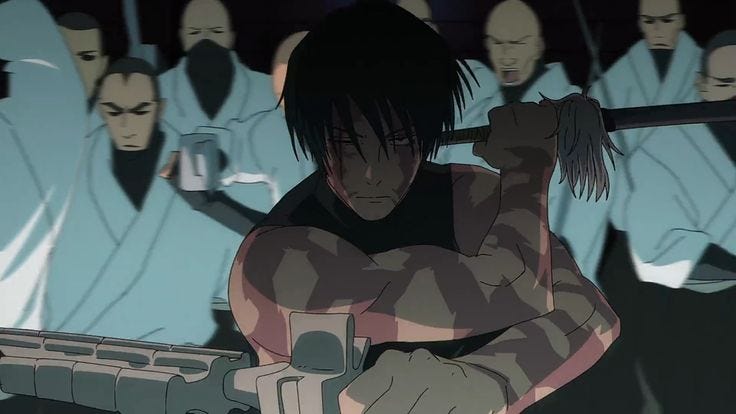
That feels unfair to say; two different genres, two different mediums, made by two different countries. But nonetheless, I can’t pretend like I wasn’t absolutely floored by Jujutsu Kaisen‘s third season so far, more so than I have been with any other show or film in a long, long time. Almost ten years since its first season’s release, the show is an entirely different beast now. Not your typical action-anime with choppy, fast-cut animation and basic backgrounds - episode four in particular was straight out of the movies. Literally - it referenced direct shots from Kill Bill Vol. 1 (2003, Tarantino) more than once, showing the distinct correlation between these two main characters, the themes of revenge, and the elegance of female rage particularly prevalent. It goes without saying that a product of Japanese media referencing Western media that was originally influenced by Japanese culture is a full circle moment that has, subtly, bridged the gap between Western and Eastern culture, bringing the two together in a combination that everyone can enjoy and appreciate.
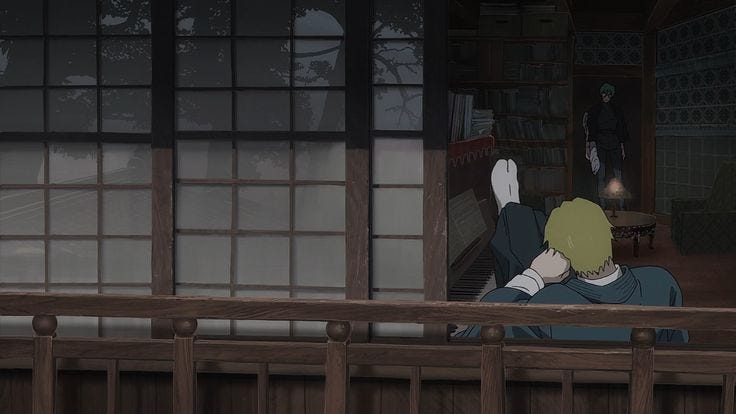
The episode following the week after, Fever, utilised a long, high-angle wide shot coupled with rotoscoping of its two scene characters to create a moment that felt drawn out, brimming with tension, and almost like a live-action shot if you squinted. A lot of online fans have been complaining about the use of so much rotoscoping for so long in one shot, but I personally feel that it adds a layer of artistry and cinematic excellence that hasn’t really been seen before in weekly anime. It’s different, and a lot of people don’t like that. But it’s spanning a new age of mainstream anime unlike any other.
The small, humane character movements captured in season three so far (most obviously episode five) shot via rotoscoping is a risky move, one that animation studio MAPPA didn’t have to take. However, they did, and their focus on making their characters more human instead of forefronting flashy impact frames and fast-paced action creates a show that suddenly feels much more intimate, more dialled in, more of an experience.
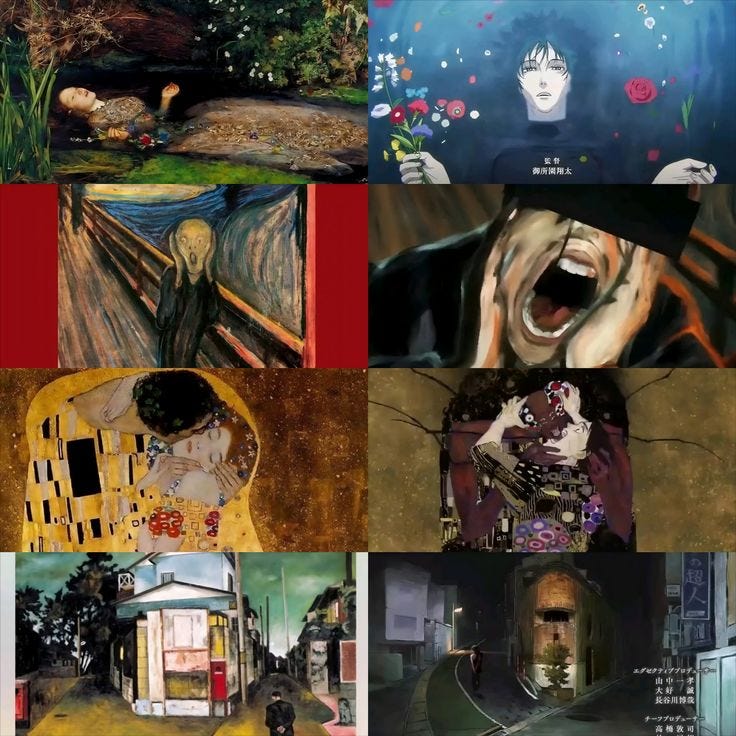
It’s not like Jujutsu Kaisen is the first anime to adopt a more cinematic style - another new gen anime, Chainsaw Man (2022, Nakayama, Yatabe) gained internet-wide recognition for its highly stylised intros and outros in its first season, heavily referencing many cult classic films. Anime openings tend to be where a lot of the stylistic vision goes - it’s a short, minute long introduction to the show you’re about to watch, and studios often put a lot into them, from the visuals to the music and the execution. Going back to Jujutsu Kaisen‘s newest season, the opening, instead of referencing film, opts for referencing famous paintings by the likes of Klimt, Monet, Schiele. This decision is subtle, but once you notice one, you notice them all. It feels like a message of reinforcement, a deliberate enunciation of ‘anime is art’. And it proves its point with its episodes spectacularly - anime is a form of animation, which is in turn a form of art. Regardless of popularity, of how mainstream it is.
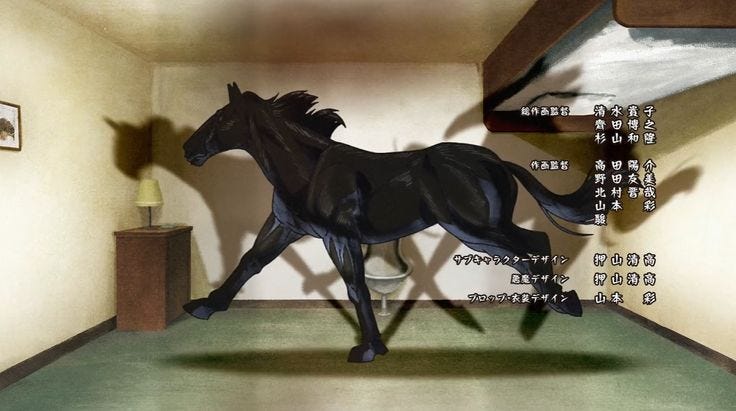
Long-standing anime’s like One Piece (1999, Oda) have also started to take on more stylistic choices. One thousand episodes in, it would be tricky (and expensive) to make every episode a masterpiece. One Piece has had more than a few beautifully animated episodes in its most recent Wano and Egghead arcs - typically saved for the big fights, the climatic moments, frames animated with so much detail that even if you don’t watch the show itself, no doubt you will have seen people raving about it online. And for an anime that started off in the 90’s, therefore with a very different style of animation; it’s nice to see progress, to see how new anime’s are adapting to people’s modern tastes, taking reference from the old and bringing it into the new. It’s refreshing to see an anime as long standing and popular as One Piece refresh itself so wonderfully - unlike shows such as One Punch Man (2018, Natsume) whose long awaited third season was animated so poorly that it bombed within weeks of it airing. Compared to shows such as Jujutsu Kaisen, One Piece, Frieren Beyond Journey’s End (2023, Saito) - it felt lazy. And it let the fans down.
Of course, Japanese animation has always been exquisite, especially within their cinematic endeavours. Studio Ghibli - need I say more? Hand drawn frames, thought out moments, colour theories applied to make every single shot look like a painting, which they essentially are. Standalone films like Paprika (2006, Kon) and Ghost In the Shell (1995, Oshii), both adapted from Japanese literature, both cult classics that have gone on to influence Western films within their corresponding genres today. Proof for the age-old argument that animation isn’t a genre - it’s a medium, and it has been used for many many years as such a medium in which incredible stories can be told, stories that live action just can’t quite do justice to.
This highly-stylised version of animation is something that seems more sought out now more than ever. With the rise of AI-generated ‘art’, the big tech is even worming its way into filmmaking, predominantly through animation as a more accessible route for it to learn. Naturally, anything that I’ve personally seen that’s been labelled as AI-generated has been of poor quality, lacking any sense of charm or authenticity. Because how could it? Art not made by a human defeats the entire point of art; it’s humanity. So to see animation both on the small and big screen, that has so obviously been drawn by a human hand, imperfections and all, is so refreshing, and marks a clear line in the sand in the ongoing battle between humans and AI: ‘you will not be able to create something like this with your robots. Ever.’
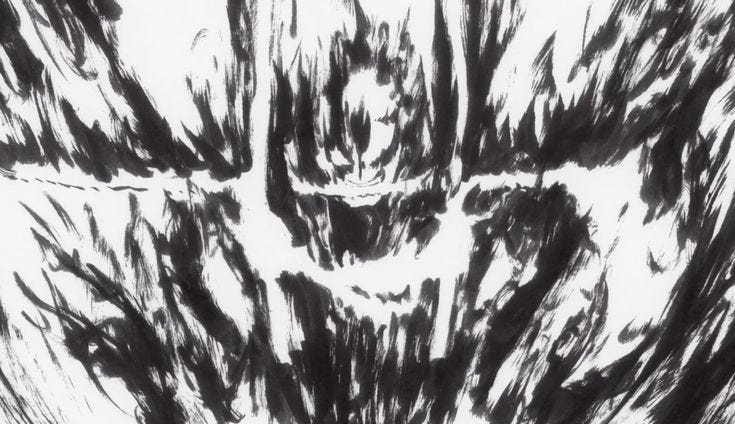
Not just in a vital effort to out-art AI, it’s undeniable that anime has boomed in popularity in the West since the turn of the 21st century, as media and culture from all corners of the world became more accessible to all with the rise of the Internet and streaming. Perhaps this is one of the many reasons why the quality of anime has developed so much in recent years; more popularity means more viewers, and therefore bigger budgets, particularly for the Big Name studios such as MAPPA and Toei. The art style, like most things, has evolved with the times. Anime isn’t just about story anymore - it’s about how it looks too. Whether some studios go too far in their artistic choices is one argument, or whether animation has been evolving quicker than live-action filmmaking for years already is another, and people are only just noticing now that it’s seeping into mainstream media.
All in all, anime is expanding both in genre and audience appeal. It’s not just an Eastern experience anymore; people from all over the world are consuming all kinds of anime. And the options of what to watch are endless - there’s something for anyone, whether it be Hello Kitty-esque or something straight out of an all too possible dystopian future. Either way, seeing a character whose entire personality is a metaphor for generational misogyny (Naoya Zenin, Jujutsu Kaisen) get his jaw punched off in exquisite frame by frame animation, is something I hope anime keeps striving for in the years to come. It’s what the people need.
References / Research
https://www.cbr.com/jujutsu-kaisen-season-3-intro-art-references-explained/
https://lifestyle.inquirer.net/563369/when-anime-doesnt-look-like-your-typical-anime/
Edited by Sonal Butley
