


When fabric is sliced at a forty-five-degree angle, it produces garments that stretch and move with the body. This technique demands technical mastery and an acceptance of instability. The bias cut is often introduced as a technical innovation as cutting on the bias was risky as fabric could stretch unevenly or lose its shape. To cut on the bias is not simply to alter construction but also to relinquish control.
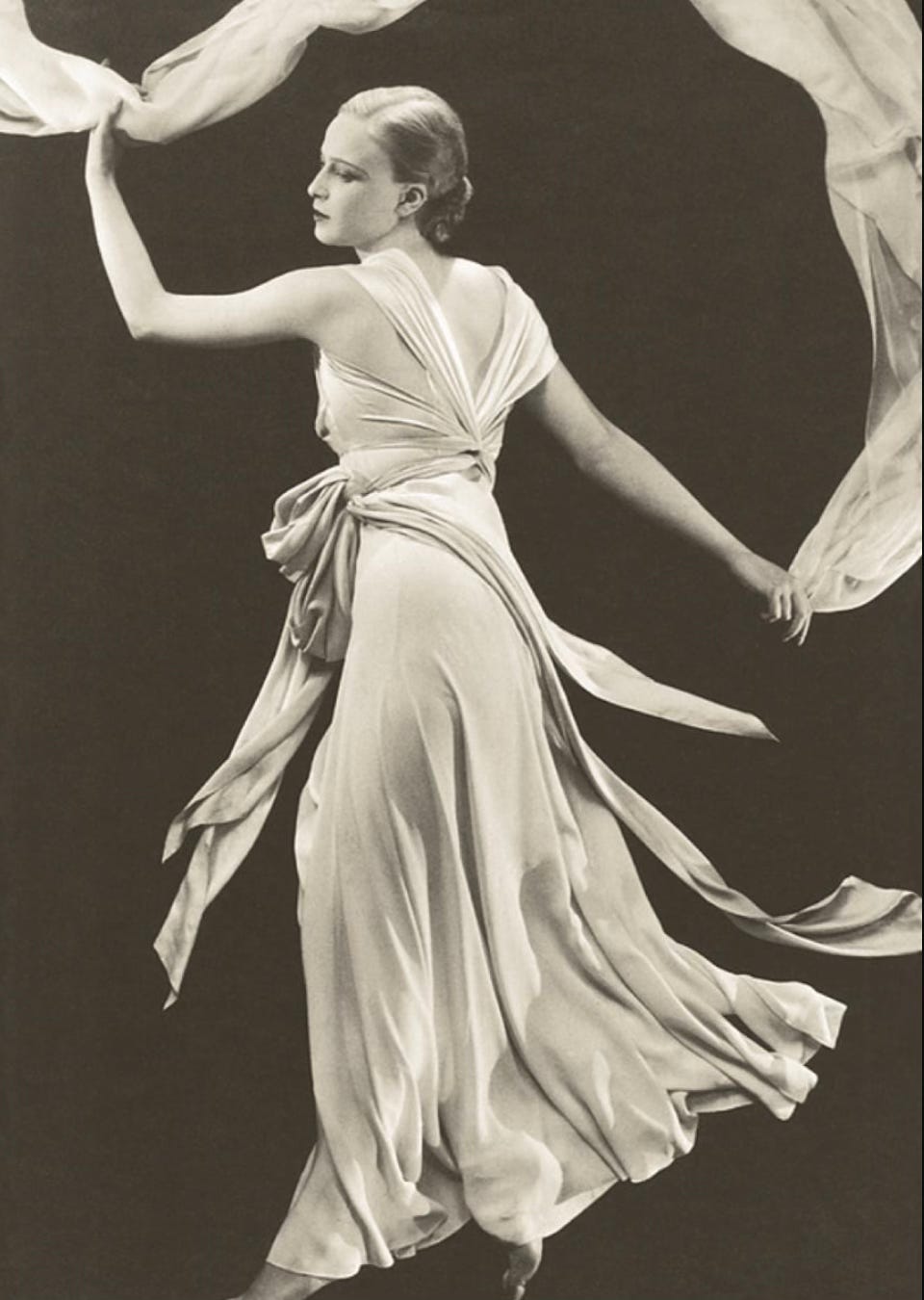
The bias cut allows fabric to behave unpredictably, to respond to gravity, motion, and the wearer herself. It was not suited for mass production or rigid tailoring systems. Unlike surface-level trends that announce themselves loudly, the bias cut reveals form. It is subtle and repeatedly rediscovered in moments of cultural recalibration.
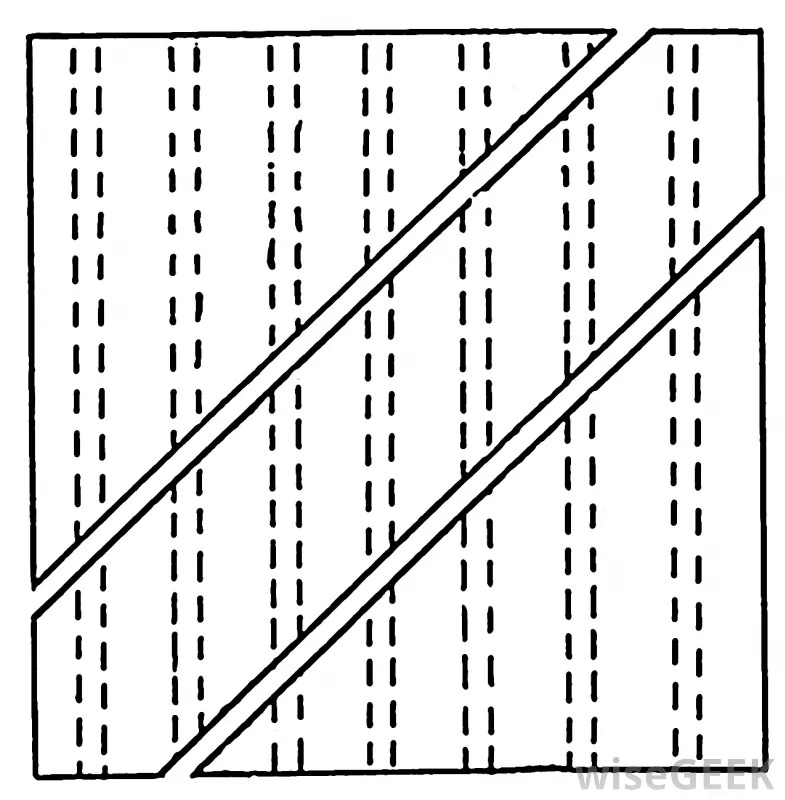
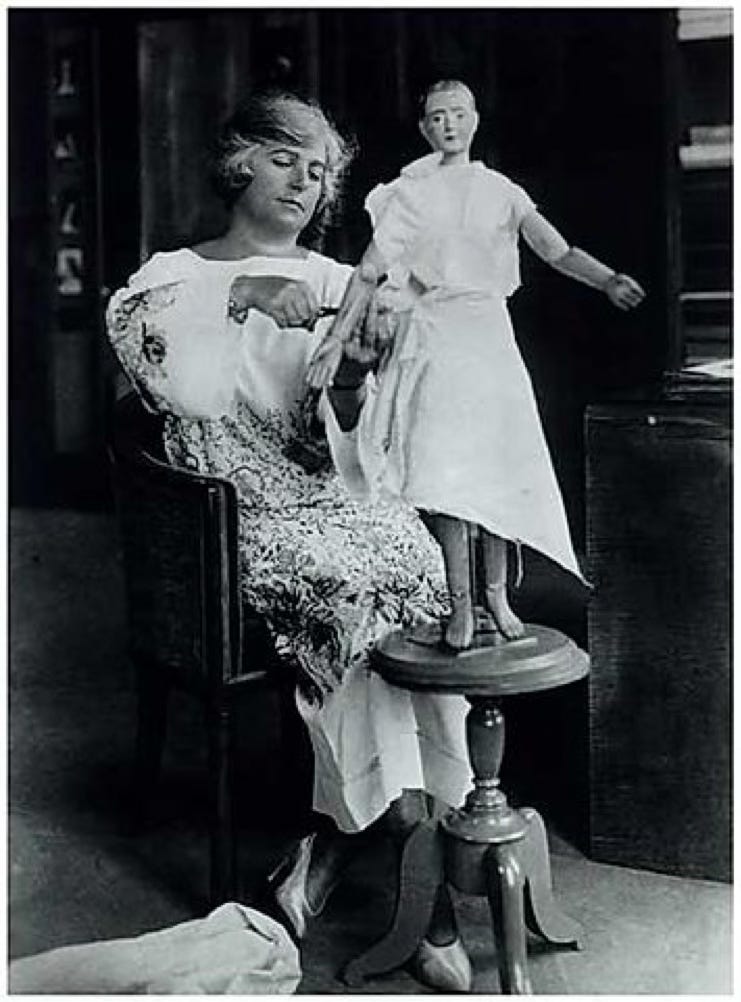
Before the twentieth century, most garments were cut along the straight grain to preserve structure and predictability. The bias cut’s rise coincided with a world reshaping itself after World War I. During the war, social hierarchies softened, gender roles shifted, and modernism challenged ornamental excess in favor of clarity and function. Therefore, Madeleine Vionnet’s embrace of the bias cut in the 1920s represented more than innovation; it was a rejection of fashion’s obsession with containment.
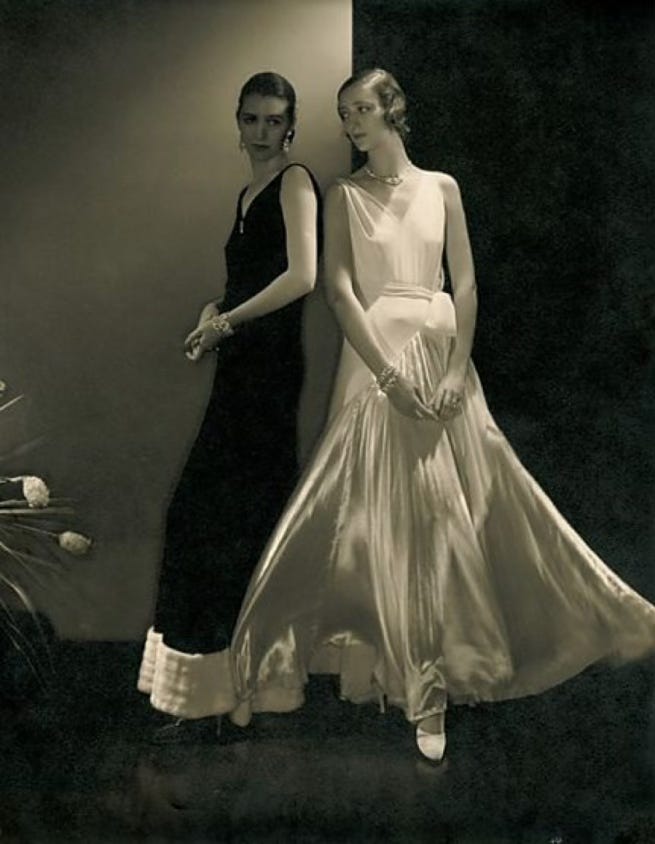
Vionnet’s garments followed the body’s logic instead of correcting it, introducing a new relationship between wearer and clothing. Yet unlike the overt rebellion of the flapper silhouette, which removed emphasis from the waist and hips, the bias-cut garments traced them. The transformation was quiet because it did not scream rebellion. It did not look shocking in the way a knee-length hemline did in 1925.

Cutting on the bias did not erase femininity but redefined it. Bias-cut fabric stretches over the fullest part of the hip and then contracts slightly as it moves upward toward the waist. That subtle contraction creates contour without rigid construction. Where earlier fashion structured the body to fit an idealized form, bias-cut garments allowed the body to dictate the shape, making it appear elegant and fluid.
What makes the bias cut particularly compelling is its cyclical return. The cut resurfaces whenever fashion enters a moment of introspection. In the 1990s, slip dresses cut on the bias surfaced as an antidote to excess, aligning with minimalist aesthetics and a cultural desire for authenticity. In the 2010s the technique returned again as it resonated with conversations around comfort, gender fluidity, and bodily autonomy. Each revival reframes the bias cut in its time. Sometimes the cut reads as restraint and other times as exposure. Its adaptability is in its refusal to dominate the body.
Today, the bias cut feels newly relevant. As fashion grapples with sustainability, inclusivity, and the rejection of harsh beauty standards. Techniques that emphasize longevity and adaptability have gained a renewed significance. A bias-cut garment ages with the body; it adjusts and responds. It is less about achieving a static ideal and more about inhabiting change.

The bias cut endures because it does not demand attention. As a deep cut in fashion history, it resists trend cycles while shaping them from beneath the surface. Its legacy is not defined by spectacle, but by precision and trust in the body itself. In a discipline often obsessed with control, the bias cut remains radical precisely because it lets go.
Edited by Hanna Villegas
