


After my brain tumor surgery, my pituitary gland, hypothalamus, and my metabolism no longer functioned properly, and therefore I started to gain a lot of weight. I was 11 years old, and only weighed about 75-80 pounds at the time of the surgery. I started gaining weight rapidly, and was diagnosed with Hypothalamic Obesity, a condition which affects weight and hunger in many brain tumor survivors. My weight is something I still struggle with18 years later. No matter how many diets I’ve tried or how much I’ve exercised, I’ve constantly faced an uphill battle.
I remember walking into Justice with my mom the summer after my surgery, to do some back-to-school clothes shopping, and suddenly realizing that not much of what they had there would fit me anymore. After finding the few things they had that I liked, we left, my mom saying she’d pick up some more clothes elsewhere for me before I went back to school.
Throughout the rest of middle school and all of high school, I struggled to find clothes that fit me that I actually liked. While some stores offered plus-sized clothing, most of what I could pick from looked like something my grandmother would wear, and was never even slightly close to resembling the style of clothes that my friends all wore. Occasionally, of course, I’d find something cute in the plus-size section, but the chances of that happening was slimmer than winning the lottery. And finding dresses for dances or parties? Especially a cute dress? That was like the shopping equivalent of Mission Impossible. I’ve lost track of the amount of time I’ve spent browsing aisles at the mall, hoping, praying that I’d find something, anything, that didn’t look like a dress you’d wear to a funeral in my size. All the while, my extreme fatigue (a side effect of my tumor and stroke) made the experience even more unbearable.
Because of this, I never really got to develop my own sense of style. My closet mostly consisted of T-shirts, jeans, sweatpants, and leggings. Sure, I had a couple of cute outfits, but most of the time, I was stuck wearing boring, old-lady-like clothes.
This trend of unfashionable plus-size clothing is still something I struggle with when shopping. It makes dressing rooms intolerable, unwelcome hell pits. I do most of my shopping online now, holding my breath when I open the packaging, praying that what’s inside will actually fit, and look good on me.
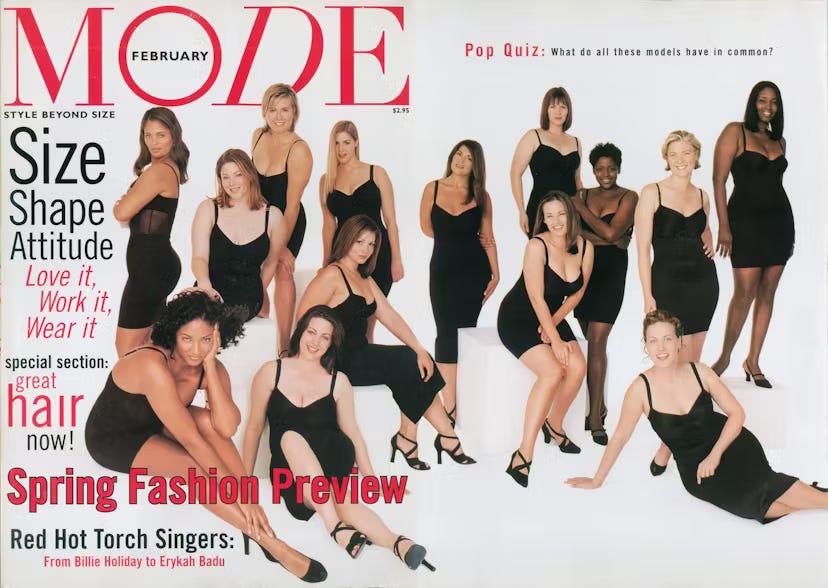
But still, even now, I have a difficult time finding fashionable, plus-sized clothing for myself. It’s like fashion designers think that the only people needing plus-sized clothing are old ladies who sit at home binge-watching TV while stuffing their faces with cake. It’s like they don’t think that younger women, moms, working women, or teens need plus-sized clothing. I don’t think it’s fair that just because someone’s built differently, they are forced to wear clothes that don’t have any style or flair to them. What a confidence booster that would’ve been for me in high school, to be able to wear clothes that fit me and actually looked remotely similar to the things my friends wore, and feel good about myself for once.
According to an article by Vogue Business: “Across 198 fashion shows, only 12 brands included any plus-size models (five brands in New York, five in London and two in Paris). The article mentioned that plus-sized models only accounted for 0.3% of models on runways, a significant decrease from already low numbers. If inclusivity is such a big trend in every other industry, why is it almost nearly omitted from fashion? Another article noted that taking away plus-sized styles and brands in the fashion industry doesn’t just mean less clothes for the plus-sized community, it causes a decreased amount of self-confidence in that whole population. “Fashion isn’t just aesthetic,” says Heinen, “It’s psychological scaffolding. When that scaffolding is absent — when someone walks into a store and sees nothing made for their body — it creates more than inconvenience. It creates emotional erosion. And over time, that erosion leaves a trace in how people speak about themselves, in how they show up socially, and in how much space they allow themselves to take up”.
Fashion is not just a form of how we dress, it’s a form of expression. It’s how we display to the world who we are. In addition to stripping away a form of self-expression, taking away plus-sized styles and brands is another way of reminding the plus-sized community that our bodies need to be fixed, and that they aren’t good enough or pretty enough. Vogue’s Business article noted that “When women’s rights are restricted, there’s often a corresponding pressure to embody an ideal that is not only physically controlled but also hyper-feminine and submissive to male desire.” Why is the women’s fashion industry so concerned with what guys want? Because the fashion industry is now so focused on pleasing men by showing thin models, body image and eating disorders are now increasing.


Additionally, when we no longer see clothes made for us, or models in our sizes, we become disconnected from fashion completely. I constantly look at the outfits my sisters-in-law’s, or my friends or co-workers wear, and think to myself, “Gee, I wish they sold that in my size, I would totally buy that!” Honestly, I’m not sure why more stores, brands, and designers haven’t started selling the cute clothes they make for regular sizes in plus sizes. They’d make a killing. It’s 2026. Why should I have to be a size small and as thin as a stick to be able to dress fashionably?
Edited by Lottie Bowden
Sources
Moreno, Silvia & Servian Franco, Fátima & Paso, Gustavo & Cepeda-Benito, Antonio. (2019). Images of Thin and Plus-Size Models Produce Opposite Effects on Women’s Body Image, Body Dissatisfaction, and Anxiety. Sex Roles. 80. 1-10. 10.1007/s11199-018-0951-3. https://www.researchgate.net/publication/326974302_Images_of_Thin_and_Plus-Size_Models_Produce_Opposite_Effects_on_Women’s_Body_Image_Body_Dissatisfaction_and_Anxiety.
Shoaib, M. (2025, March 17). The Vogue Business Autumn/Winter 2025 size inclusivity report. Vogue. https://www.vogue.com/article/the-vogue-business-autumn-winter-2025-size-inclusivity-report
Tovar, V. (2025, July 14). The psychological cost of the Plus-Size retail collapse. Forbes. https://www.forbes.com/sites/virgietovar/2025/07/12/the-psychological-cost-of-the-plus-size-retail-collapse/
https://www.vogue.com/article/the-vogue-business-autumn-winter-2025-size-inclusivity-report
