


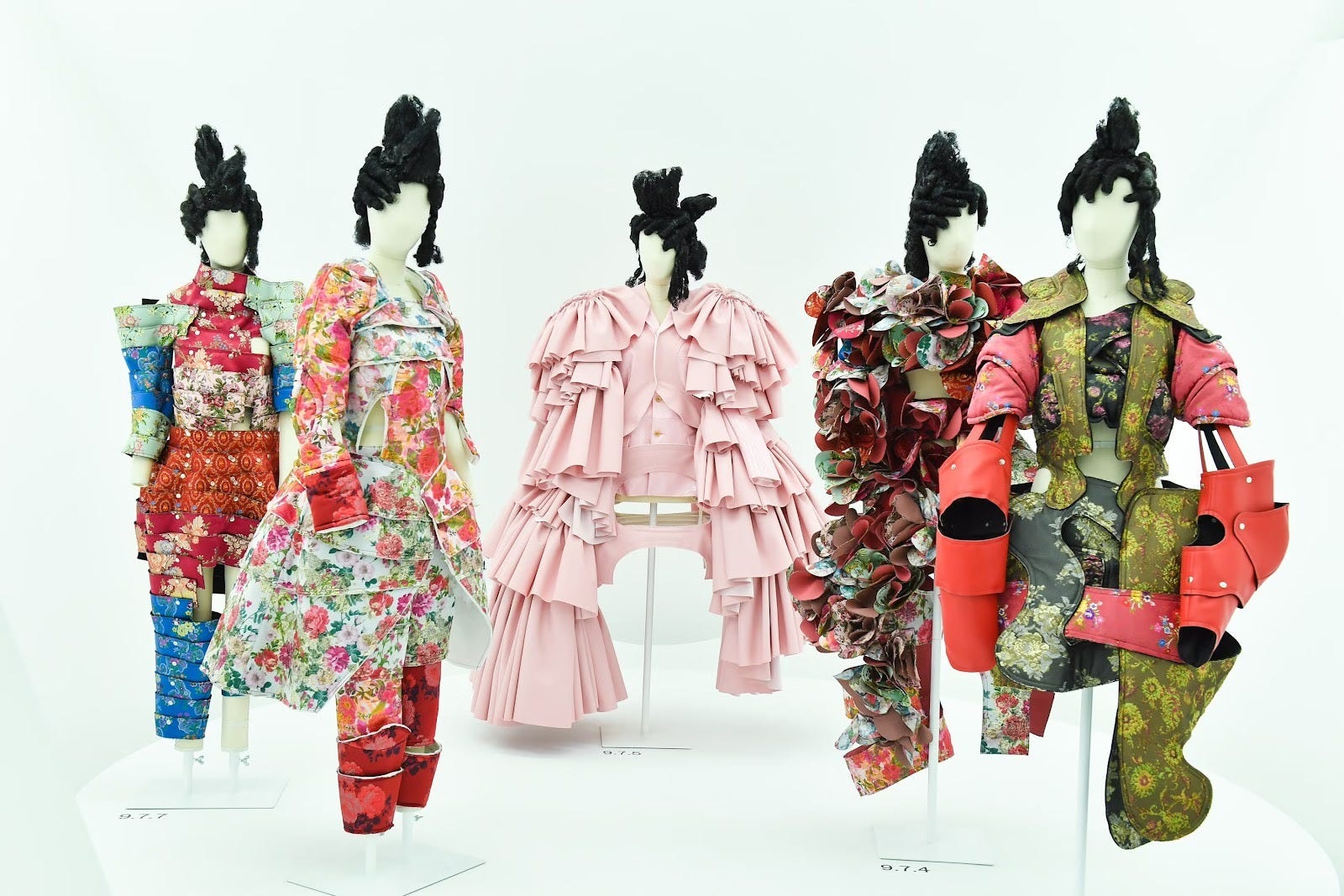
Statement dressing extends beyond bold colours or heavy jewellery; it stems from how you style those pieces. Statements are defined by the garments, proportions, and styling decisions that construct a distinct visual identity.
Statement dressing operates through form rather than immediate visual impact.
However, the traditional understanding of statement dressing is now undergoing a shift, from being anchored in immediacy or overt visibility to being fixed within construction, proportion, and form. It relied on boldness, it commanded attention, but now it operates through restraint. In an environment saturated with visual expression, boldness has become somewhat predictable, so the move is towards more nuanced forms of expression. As a result, statement dressing requires closer attention and longer engagement than delivering visuals that are immediately recognisable.
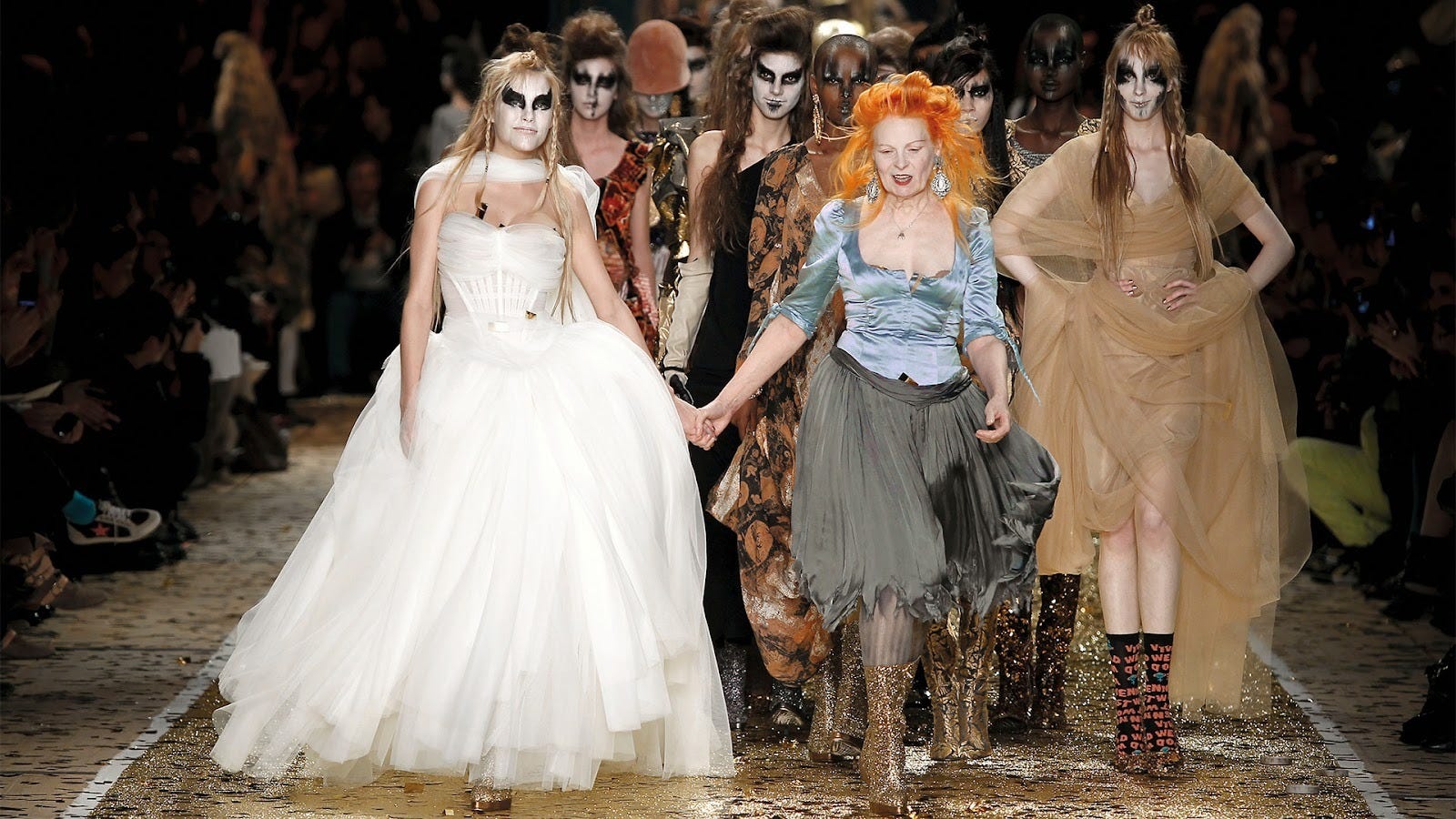
In traditional forms of statement dressing, the impact of a garment was largely defined by how eye-catching it was, either through bold prints or through striking accessories.
Increasingly, however, the “statement” no longer exists in how it is perceived, rather it exists in the construction of the garment; how it is built, how it moves and how it subverts traditional construction expectations.
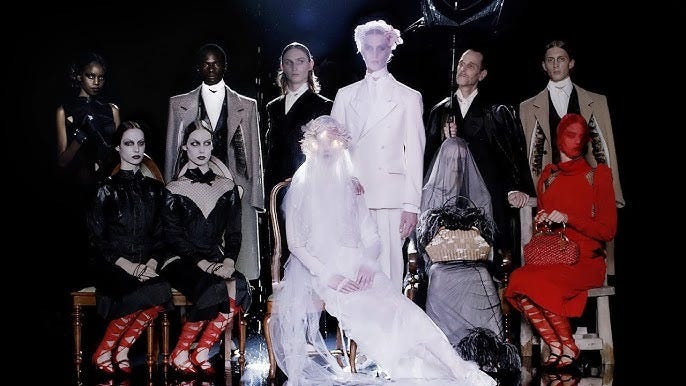
This shift becomes more apparent when we see how the garments are constructed. As seen with Vivienne Westwood, it started as a punk brand, rejecting social norms in favour of rawness and disruption. Today, the rebellion has shifted towards a more structured, thoughtful approach.
As statement fashion shifts, construction irregularities, which were once considered imperfections, are now deliberately integrated, through asymmetry, uneven hemlines and slight disruptions in print. These are controlled deviations that hold attention by reinforcing a quieter approach to statement dressing. We can see in brands like Rick Owens and Rei Kawakubo, which rely on an alternative sensibility but, through sculptural designs, differ from traditional gritty punk, traditional proportions, and silhouettes.
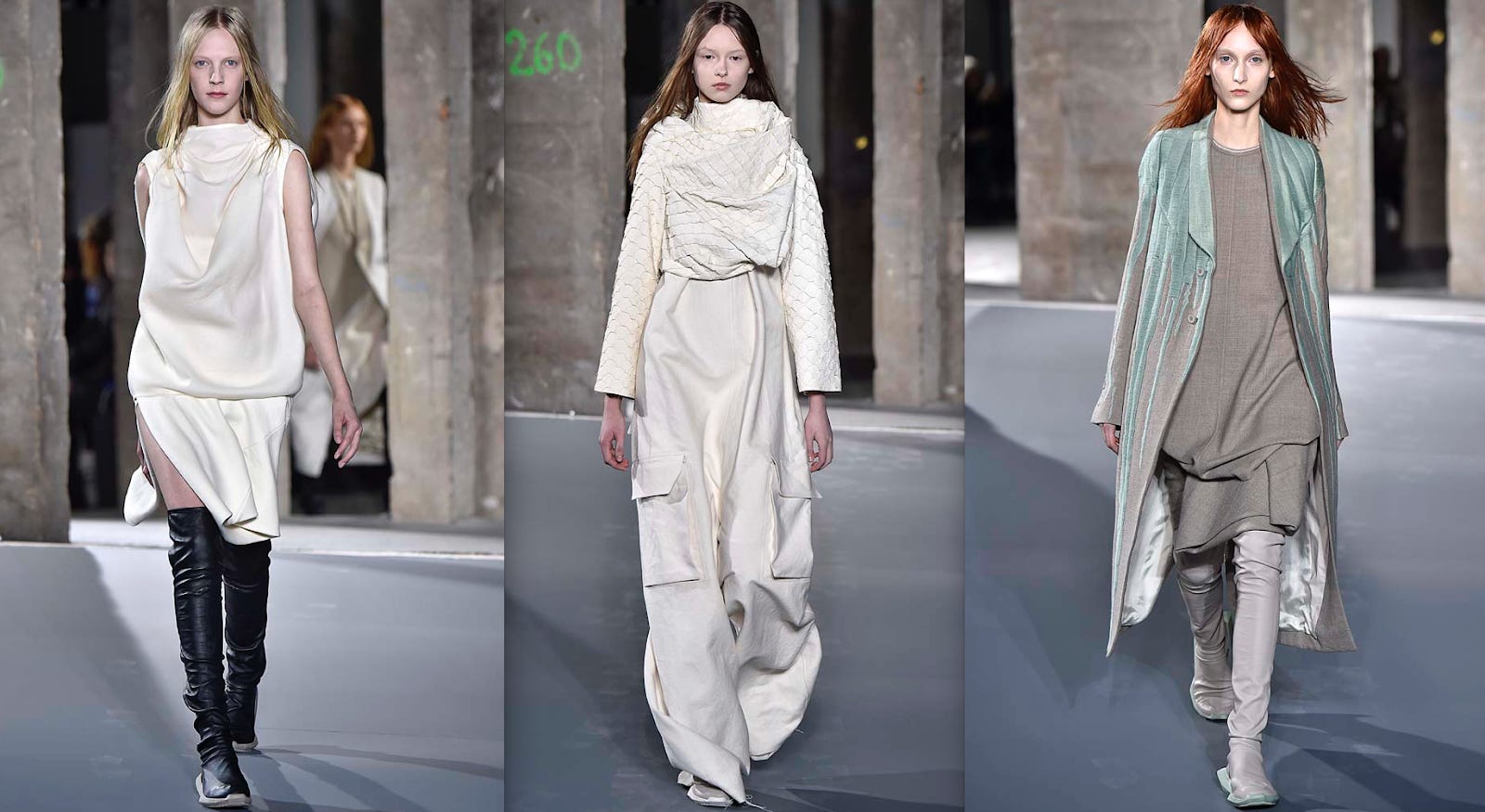
There is broader saturation of visual culture, where overt expression no longer carries the same impact it once did.
There is also a growing sensitivity among designers and the audience towards design, so the focus shifts from surface-level identity to construction and intent, and the emphasis is no longer on being instantly seen, but on being understood.
When we see designers and houses like Maison Margiela and Jil Sander, we can observe that the statement is embedded in the garment’s construction rather than its surface; there is a restrained yet deliberate design. Proportion, material and the cut of the garment replace the overt surface ornamentation.
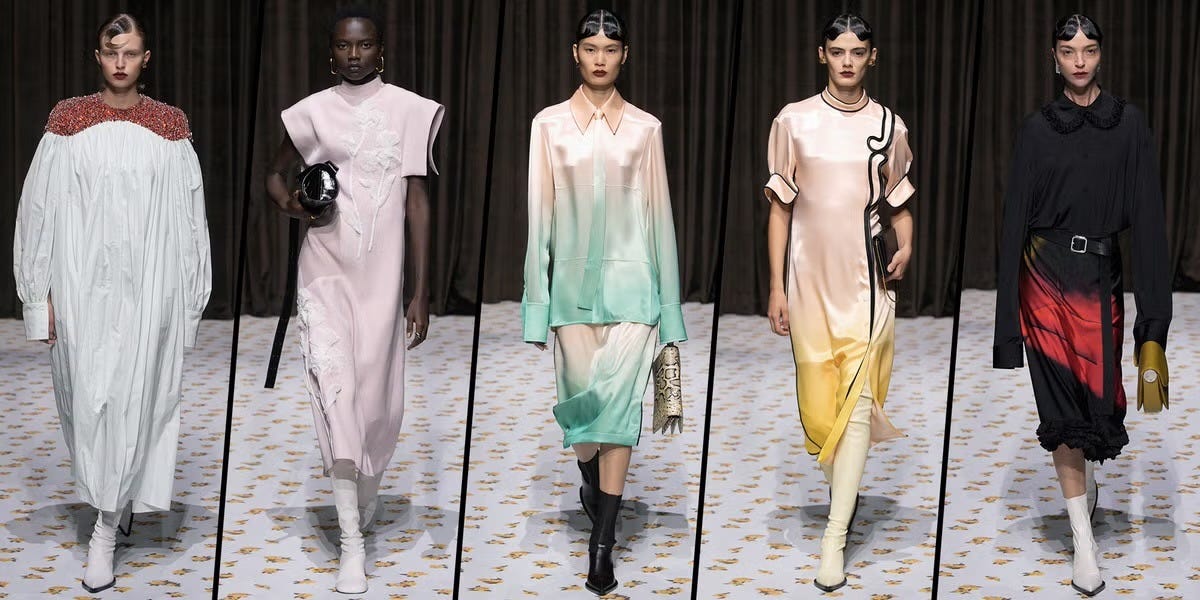
This shift has to carry such an intention that the slightest deviation in structure carries significance
Statement dressing is no longer about commanding attention through excess ornamentation, but about sustaining through precision. Impact is now built into the garment rather than applied to it.
Edited by Hanna Villegas
