


Gender is a social and cultural construct that defines the roles, behaviors, and expressions of women and men. Sex is the biological, physiological, and genetic characteristic that defines humans as male, female, or intersex. Gender is a manifestation of how one feels internally, while sex can be attributed and viewed externally.
Almost everything in our lives is influenced by gender. Looking around my room, I can find a wealth of examples of how the things I enjoy or have been conditioned to enjoy are related to my gender. I have two bottles of red wine on my desk, which I am saving for a special occasion. I am more likely to enjoy this beverage because I grew up closer to women who relax with a glass of wine than to men who tend towards beer or straight liquor.
A glance to my left reveals my closet, where I hold far more clothes than I need. However, I have always felt the need to be especially fashionable to attract positive attention from those around me, and women have to try much harder than men to create a standout outfit. Men can just pull up some cargo pants with a tasteful button-up and receive applause for their ingenuity.
Even the giant corkboard displaying only a fraction of the pictures with friends I hold close to my heart is an extension of my gender. Femininity is tied to color, kitchyness, and a wider knowledge of aesthetics. All of these aspects can be found on this corkboard: saturated images, bright postcards, and sparkling pins and buttons. Also, I can’t help but wonder whether I would display these images with such fondness if I had grown up as a man, as another important and socially ingrained element of femininity is the profound ability to care for others.
I have struggled with my gender identity in the past as someone who doesn’t feel like they fully fit into female spaces, but also definitely does not fit into male ones. Sometimes I have wondered what life would be like if I were absent of gender. However, my mind can hardly comprehend the idea wherein all of society decided to leave gender behind. Gender structures run so deep in our contemporary world, but what if, with the snap of one’s fingers, we could leave the performance behind?
A Centuries-old Performance for Power
The system of categorizing people into two distinct groups is an act of control rather than a vie for individuality. We know this because, historically and currently, people assigned to the male category have been given greater social, economic, and interpersonal power. Those assigned to the female category are taught to be subservient, peaceful, and uncombative about the disadvantages imposed on them by men.
In our society, man is seen as the default while woman is othered. This means systems ranging from medical research to architectural design are framed around a man’s body, experiences, and needs. Many men do not actively seek opportunities to dominate women, but they all passively attain higher wages, gain more respect, and reap the benefits of heightened political representation.
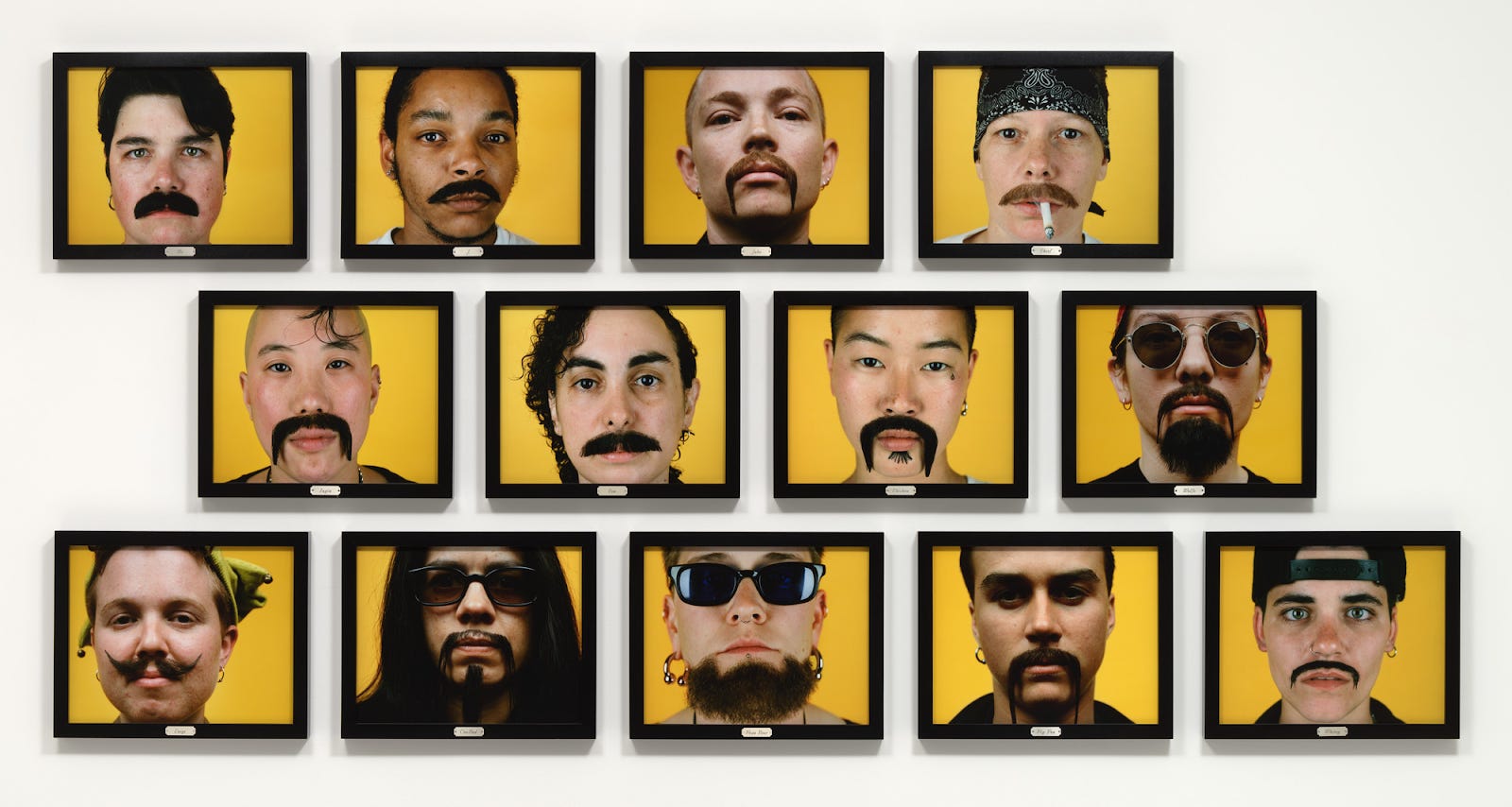
Gender is a performance that all of us are born into, but there are some of us who attempt to reject it i.e. gender outlaws. Kate Bornstein’s ‘Gender Outlaw: On Men, Women, and the Rest of Us’ describes the idea of someone who defies the rigid binary of masculinity and femininity, and in turn heteronormative expectations. Bornstein proposes that gender categories constitute a class system that preserves power by forcing people into boxes, with one box being given significant privileges over the other.
“The gender outlaw is a person who has stepped outside the boundaries of the gender system,” Bornstein writes. “To the extent that we continue to maintain the gender binary, we continue to maintain a system of oppression.”
Bornstein argues that fashion has been turned into a semiotic system that allows people to infer one’s gender, class, and social role. To imagine a world outside of gender, we would have to remove all clothes from the gender they are associated with. Instead of wearing a skirt to appear feminine (submissive) or a suit to appear masculine (dominant), people would be more inclined to reflect their individual moods and aesthetic preferences.
This observation is interesting, especially in our current social media landscape, where everyone feels the need to fit into an aesthetic box. If one wants to be viewed as gentle, feminine, and sweet, they wear frilly skirts, pastel colors, and tons of bows. Still, not many allow themselves to move beyond their chosen Pinterest aesthetic, preferring to attach their identity and personality to a single style.
Within Bornstein’s framework, one could wear a drab pantsuit one day and a sequined gown the next without it being a statement about gender, but rather a simple change in mood and preferences. Personally, I yearn for a world where clothes are used for their comfort, aesthetics, and functionality rather than as an essential statement of one’s positioning in society.
How We Define Sexuality

The way we define our sexuality has always been attached to gender. Bisexual, heterosexual, homosexual— all of these terms refer to sexual attraction based on gender, attraction to both genders, the opposite gender, or the same gender. We base our attraction on the perceived gender, or lack thereof, of the other individual. How would this change if society removed gender completely?
According to Eve Kosofsky Sedgwick in ‘The Epistemology of the Closet,’ the gender of one’s partner is only one axis of sexuality that, if removed, would force one to focus more on other more descriptive axes of sexuality. Because our world is highly gendered, we treat one aspect of sexuality as the only one that matters, but there is much more that goes into sexual attraction.
“It seems to me that many of the most important things that can be said about people’s sexualities—about the textures of their desires, their fantasies, their practices— don’t have much to do with the gender of their partners,” Kosofsky wrote.
According to Kosofsky, instead of focusing on gender, our society would shift to focusing on power dynamics, sensory preferences, the number of partners, and the specifics of a sexual act. A small percentage of contemporary society already focuses on these axes; many people craft their online dating profiles around kinks—non-mainstream sexual preferences—or feel comfortable sharing their preferred number of sexual or romantic partners.
This non-traditional way of viewing sexual experiences is nearly completely detached from gender, as one may focus on the self-assigned label of dominant, submissive, polyamorous, monogamous, etc., as the core of their sexual identity rather than focusing on the gender of the other party. Further, this community separates its labels from the assumed power dynamics of heterosexual relationships where man is dominant and woman is submissive; any label is available to anyone regardless of anatomy or gender identification.
A shift in sexual identity would also change romantic relationships entirely. Outside of the bedroom, relationships would be centered on partner compatibility across all areas of life rather than on gender identification. Current societal scripts pressure women to take charge of housework and men to be the breadwinners, but without these expectations to fall back on, partners would have to communicate about all aspects of sharing a life together. Labor in and outside the home would instead be divided by one’s skills and schedule.
The issue of class and power disparity may still be present. Still, an absence of gender would lead people to seek out partners for their unique personality and skills rather than shallow, gendered aesthetics.
Technology as a Bridge to a Post-Gender World
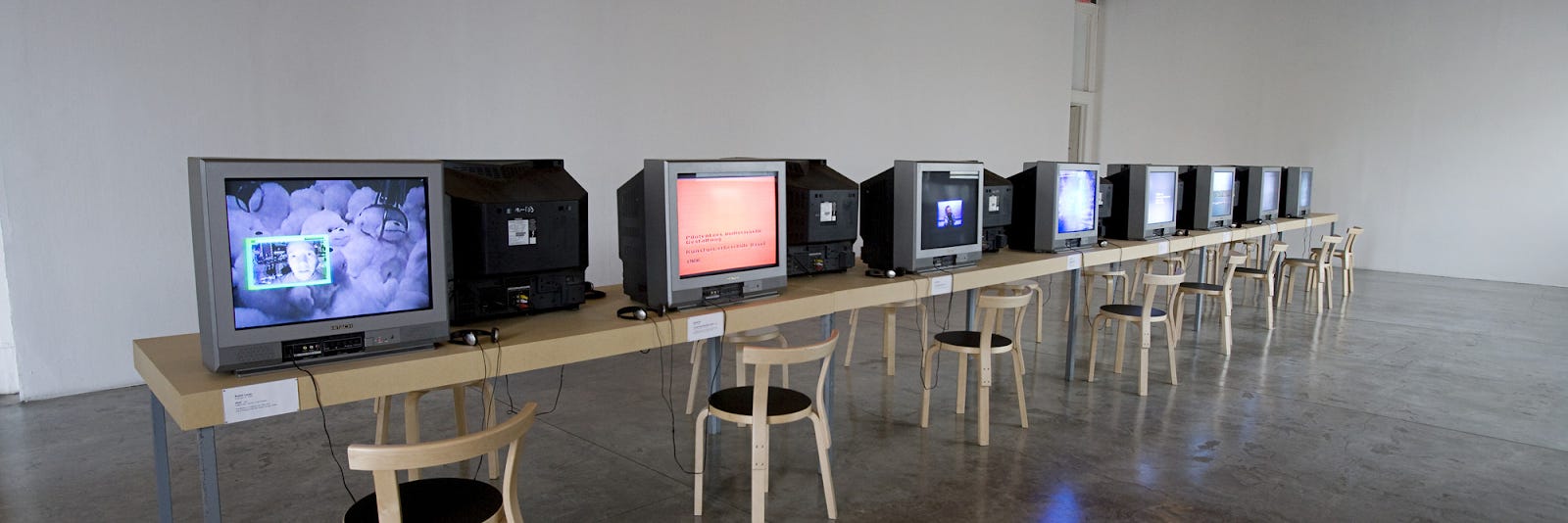
Current technological advancements may be, in many ways, frightening, but many feminist writers have theorized about how humans interlinking with technology may lead to the desired post-gender utopia. Technology is inherently genderless, possibly one of the most gender-free human advancements, as language, agriculture, and economics have always been tied to gender.
Radical feminist Shulamith Firestone argued in ‘The Dialectic of Sex: The Case for Feminist Revolution’ that gender inequality is rooted in biology, specifically, the burden of pregnancy and childbirth. According to her, a society could never be genderless with complete equality if one sex is responsible for maintaining the entire species. The burden of pregnancy on women not only leads to inequality in health and well-being, as pregnancy comes with many risks and side effects, but it will also always differentiate those born as women from those not.
The central technology required to create this utopia is artificial wombs, which our society is coming closer and closer to creating. If gestation could occur outside of the human body, the biological necessity of female reproduction would be moot. This, in combination with the theories presented earlier, would lead to less necessary distinction between those born female or male, as pregnancy could be completed by a robot.
An alteration of this intrinsic part of female-male dynamics could also make child-rearing a less gender-dependent job. The common idea of the biological family unit would be completely erased. There is no “provider” or “mother.” With a lack of gender completely, children would likely be raised in a more communal environment with no emphasis on the child bearer completing most of the emotional and physical labor.
Technological advancements would not only affect pregnancy; this is only a glimpse of what could change in a technology-first society. The performance of gender would no longer be necessary, as the societal “stage” would be completely altered and adapted around the average person rather than the average man.
A world without gender is not a world without identity; rather, it is a world where identity is finally liberated from the constraints of a centuries-old performance. By dismantling the binary through social defiance and technological innovation, we move toward a society in which nature is no longer a tool of control. In this post-gender utopia, we are free to be gender outlaws, not defined by the boxes we fit into, but by the unique textures of our desires, the functionality of our choices, and our shared capacity to care for one another as equals.
Edited by Sonal Butley
