


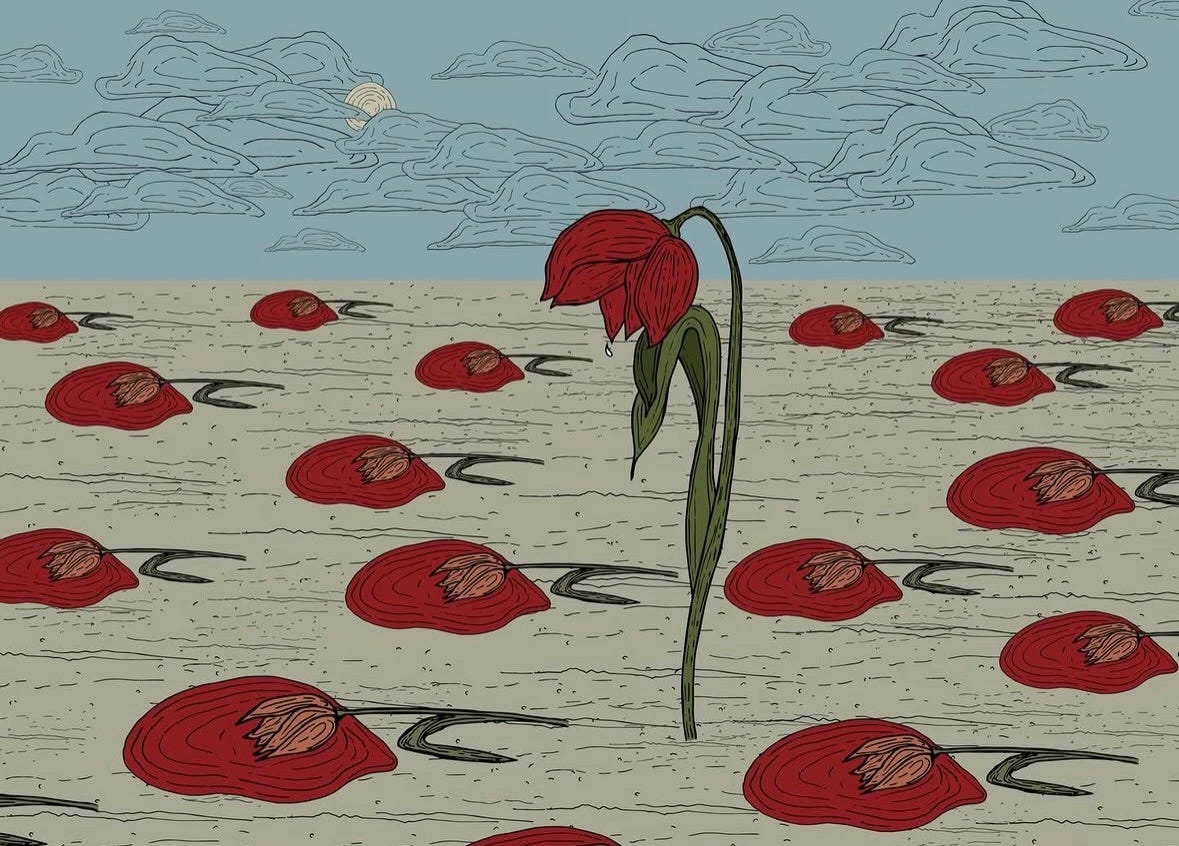
In 1870, a woman by the name of Julia Ward Howe, an abolitionist, women’s rights advocate and peace activist issued what is now recognized today as the Mother’s Day Proclamation Act, originally called Appeal to womanhood throughout the world. Within this proclamation, Howe encouraged the idea of the creation of an international body of women who could find ways to avoid war and bloodshed:
“I earnestly ask that a general congress of women, without limit of nationality, may be appointed … to promote the alliance of the different nationalities, the amicable settlement of international questions, the great and general interests of peace.”
This would go on to be ignored of course, which prompted Howe to then seek to establish an annual Mother’s Day in June which occurred inconsistently. The Mother’s Day we all celebrate today in May is due largely in part to Anna Jarvis who established the day to honor her own mother, Ann Jarvis, a woman who gave birth to over a dozen children, losing many to illness and diseases common during the 1800’s. Ann would go on to work tirelessly in her community to help other mothers avoid the same pains and losses she underwent. Organizing “Mother’s Work Clubs” and special days where women in the community would come together to collect trash and take on projects to improve community conditions and hygiene, things would get more serious as the Civil War rolled around, the women found themselves helping both sides of the war and promoting unity and peace. Her daughter, Anna, who would never have children of her own, in order to honor her mother’s work and legacy, sought to establish a national Mother’s Day on the second Sunday of May, the day her mother Ann died, encouraging people to write letters of gratitude to their mothers and to gift flowers, more notably white carnations. This would later be cemented by President Wilson with a proclamation of the first national Mother’s Day just before the start of World War I in 1914.
I write this as a mother myself, to a beautiful baby boy who is my reason for breathing, as most mothers will tell you. On this day I want to bring attention to mothers that have impacted me in my own journey, whom I feel encompass what it is to bring life to this world.
1. Mamie Till
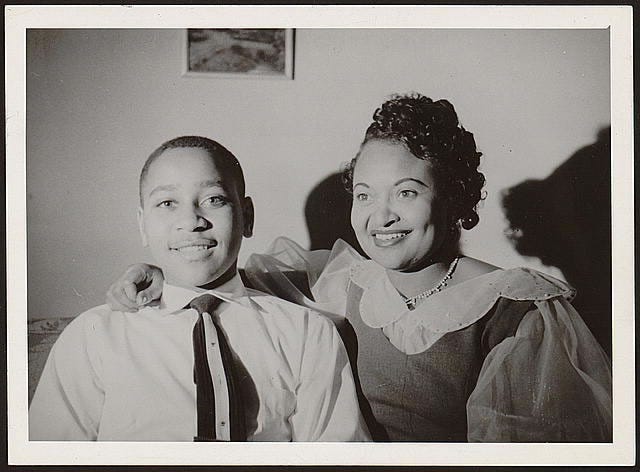
I will never not be overcome with emotion when I think of Mamie Till, and I think about her very often. I have since I was a child and even more so as a mother myself. Mamie Till was an educator and activist, who marked history undoubtedly with how she chose to handle the brutal murder of her 14 year old son, Emmett Till. In 1955, while visiting family, Emmett was abducted and brutally murdered due to the white lies of a woman named Carolyn Bryant after Emmet was in her family’s grocery store. Part of Carolyn’s lies insisted that the young Emmett grabbed her around the waist, made sexual advances, and used vulgar language. Years later in a 2008 interview with Duke University historian Dr. Timothy Tyson, author of “The Blood of Emmett Till’, Carolyn admitted, “That part’s not true,” and stated regarding the rest of the alleged encounter, “Honestly, I just don’t remember”.
Days later after Emmett had been in the grocery store, Carolyn’s husband and his half brother abducted Emmett at gunpoint from his uncle’s home whom he had been visiting, took him to a barn and tortured him before throwing his body into the Mississippi river. Three days later, Emmett’s disfigured body was found in the river. The local sheriff’s department would then try to rush his burial that same day, an inhumane attempt to conceal one of our nation’s worst acts of racial violence to date, even prompting his uncle to sign an agreement not to open the casket. When Mamie caught wind of this, she called everyone she knew to bring her baby home.
With the help of individuals such as Civil rights leader T. R. M. Howard who provided vital assistance and financial backing, Chicago Mayor Richard J. Daley and Illinois Governor William Stratton applied heavy political pressure to ensure his body was safely transported back to Illinois. The Illinois politicians also sought assistance from President Eisenhower and his administration, to which they got no response.
The same train that took Emmett to Mississippi brought his body back home. Upon seeing the sealed wooden casket and despite the document Emmett’s uncle signed, Mamie cried out, “Well, give me a crowbar, give me whatever. What can they do to me? They’ve taken my son.” Mamie Till would mark history by demanding an open casket funeral, famously remarking “Let the people see what they did to my boy, Let the world see what I’ve seen.” I find myself echoing Dr. Tyson’s words that, “Nothing that boy did could ever justify what happened to him.” Emmett was Mamie’s only child. She would go on to channel her grief through life-long activism, building a 23 year career as an educator and touring the country with the NAACP speaking out against racial violence. She also founded the Emmett Till Players, a touring youth drama group.
2. Mary Wollstonecraft
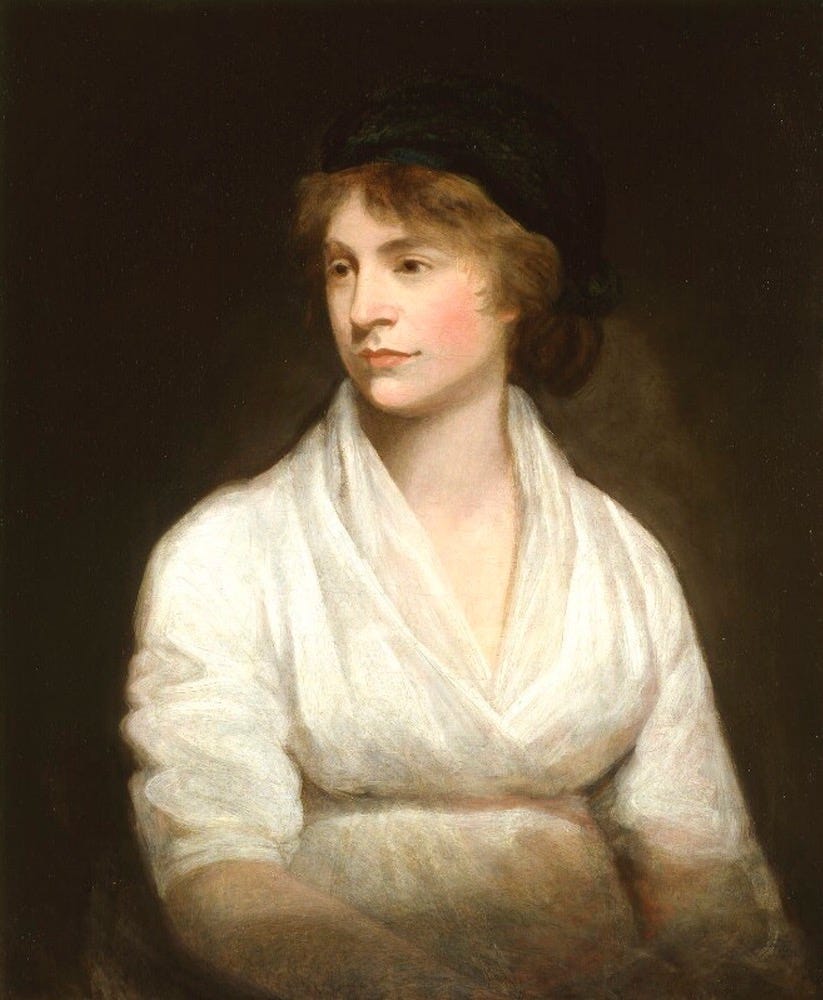
Nicknamed by many as the “Mother of Feminism” (personally I think this title largely belongs to bell hooks) Mary Wollstonecraft was a writer, philosopher and foundational feminist who spent her life advocating for social and educational equality for women. Known largely for her landmark treatise, The Vindication of the Rights of Woman (1792), which argued that women are not naturally inferior to men but only appear to be due to a lack of education. She wrote novels, a history of the French Revolution, travelogues, and children’s books. For women during her time she championed intellectual independence and challenging social conventions regarding women’s roles, was as impactful to later generations as her writing. She is also known as the mother of Mary Shelley, author of Frankenstein.
3. Eliza Berry
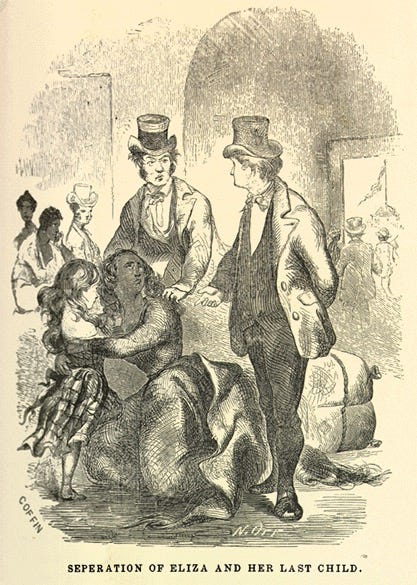
Growing up in a family very proud and protective of their African ancestry meant that we often watched telenovelas, movies, and shows that dealt with slavery. When 12 Years A Slave came out in 2013, based on the 1853 memoir of the same name by Solomon Northup, a free Black man from New York who was kidnapped in 1841 and sold into slavery in Louisiana, my family was sat. Right away I was affected by Eliza Berry. I watched this film again earlier this year and while I remembered being overcome with emotion as a child at hearing the children cry out for their mother as they were ripped apart, I was now watching it as a mother. Roughly 30 minutes into the film we see Benedict Cumberbatch as plantation owner William Ford at an auction for enslaved persons in New Orleans. As if seeing humans be inspected and sold like cattle isn’t horrifying enough, we see a woman by the name of Eliza Berry clinging onto her two children, Randall and Emily. During the auction, Ford purchases Eliza after Randall is sold to another, Emily is deemed “not for sale” by the cruel slave trader Theophilus Freeman played by Paul Giamatti. Eliza desperately begs that her family not be separated, crying and pleading to keep her children with her.
Ford appears to be uncomfortable and somewhat sympathetic in comparison to the other men in the room. The scene is devastating because while Ford is portrayed as more “kind” than many other enslavers in the film, yet he still participates in and enables the system of slavery. His failure to act fully, despite recognizing Eliza’s suffering, highlights one of the movie’s central themes: that even supposedly humane people were complicit in the cruelty of slavery. I could never imagine the anxiety and pain Eliza felt, being given the false hope of freedom for her and her children by her former enslaver and the pain of having them b e ripped away so inhumanely and not knowing what happened to them. This is only a crumb of what enslaved women dealt with as mothers. There aren’t shrines big enough or history books thick enough. Eliza spends the remainder of her life stricken with grief, which later is the cause of her death.
4. Unnamed Palestinian Mother
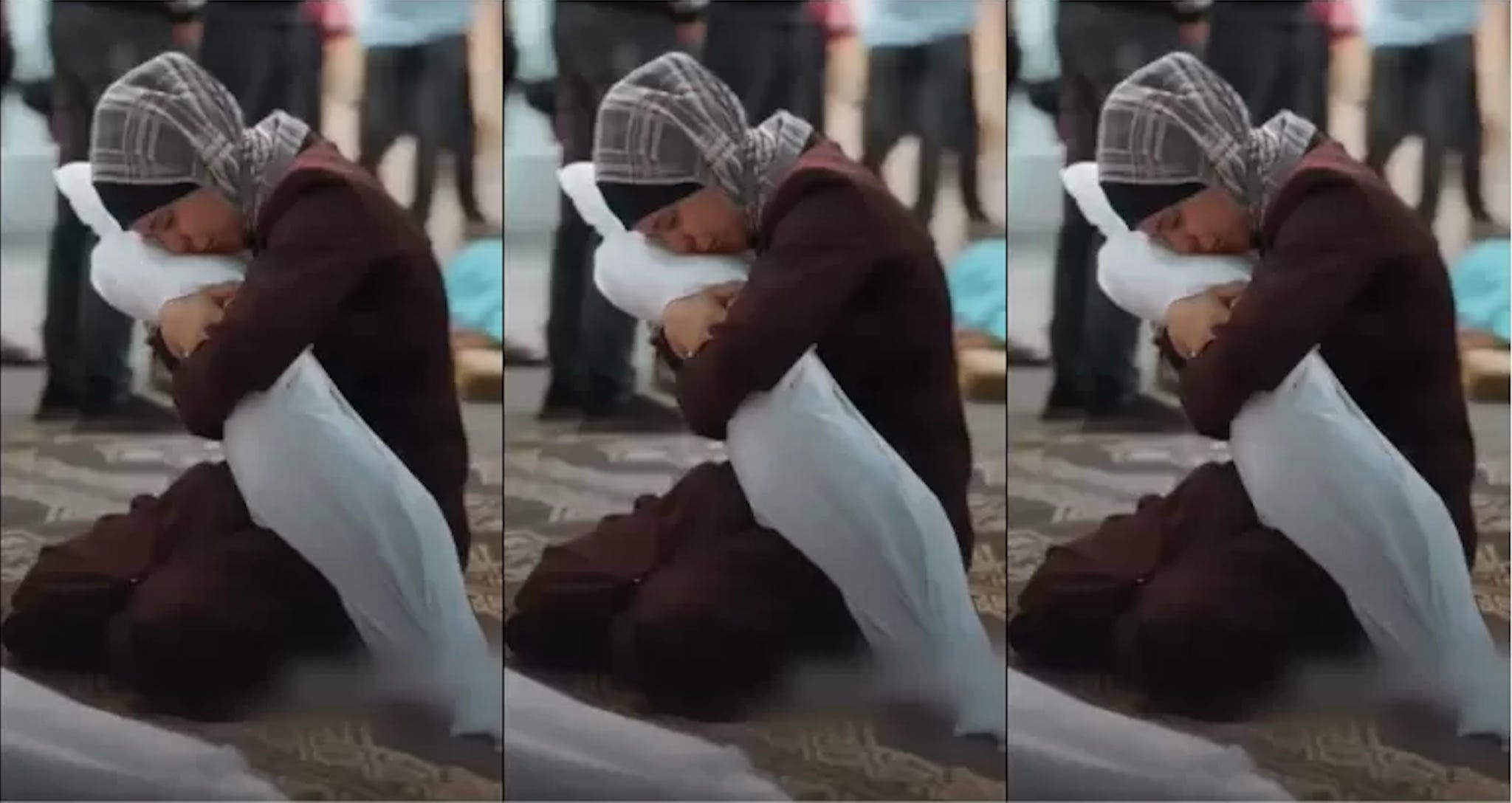
This is one of the very first images/videos I saw that has greatly affected how I hug and kiss my child to this day. There is not one hug or kiss where I do not think of this woman. “In a touching video clip, the Palestinian woman warmly embraced her child for the last time after he was martyred in a violent raid carried out by the Israeli army on the city of Rafah in southern Gaza. In this farewell embrace, the mother cried bitterly and kissed her martyred child, then held him close in a heartbreaking scene.” According to analysis by the UN and international aid organizations, the rate and number of Palestinian children killed in the current Gaza conflict have surpassed the child death tolls of any other single global conflict in recent years. Never could we ever imagine seeing as many dead children as we have with this genocide. One would think more would be shocked, that more would be done. War is fought on battlefields, but its deepest wounds are carried by women and children.
5. Michelle Obama
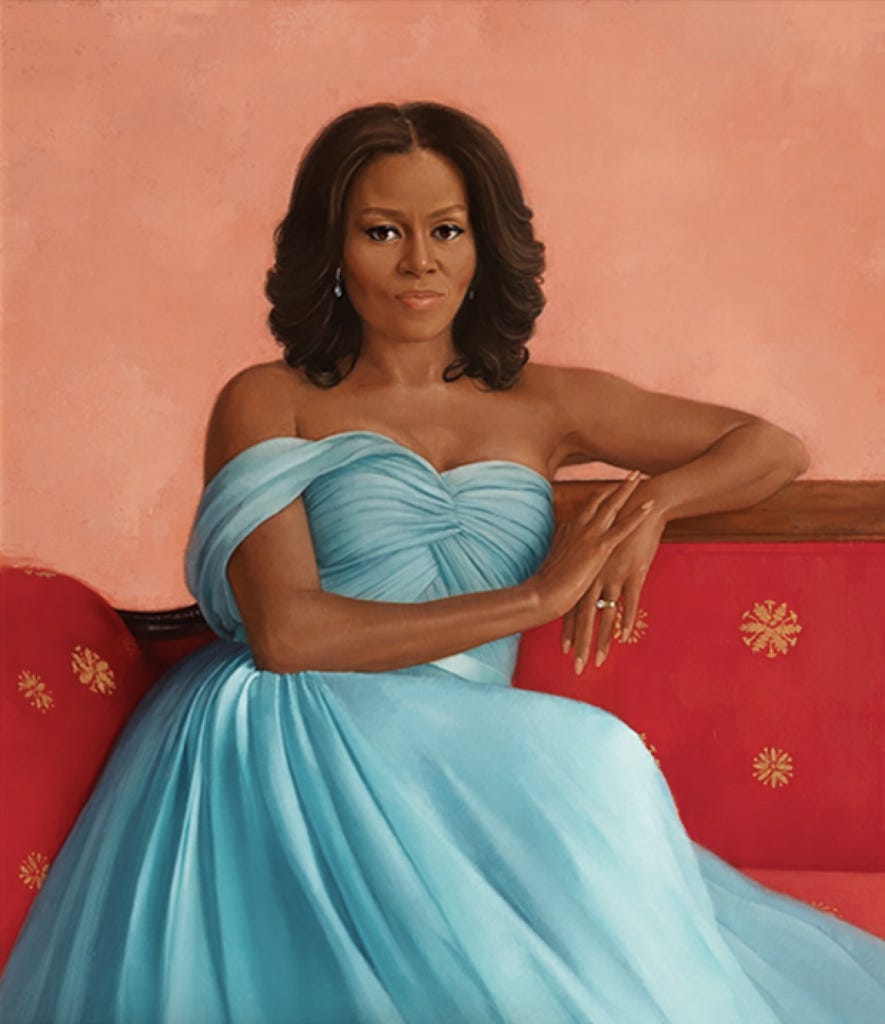
I love this woman down. Part of the reason for the infamous D.C trip right before Kailon Magazine going public was me wanting to see Michelle’s painting in the National Gallery. Though that one is by Amy Sherald, I much prefer this one by artist Sharon Sprung, it’s just a bit more difficult to see as it is part of the White House Collection. Michelle made us all laugh in 2022 when she said that there was a period of about 10 years where she “couldn’t stand” 44th President Barack Obama, a comment blown out of proportion later by the internet. What she was really explaining was the emotional and personal strain that came from balancing motherhood, career sacrifices, and the unequal burdens that can happen in marriage while Barack pursued a demanding political career. Her remarks gave people a deeper understanding of the unseen sacrifices she made as a wife and mother during the years leading up to Barack Obama becoming the first Black president of the United States. Michelle Obama carried not only the pressures of raising their children and supporting her husband’s ambitions, but also the weight of public scrutiny, racial hostility, and the historic expectations placed on their family. Her honesty helped humanize their relationship and showed that behind a groundbreaking presidency was a family making difficult personal sacrifices that the public rarely sees. Never have we had a first lady more influential and a powerhouse in her own right. I was recently gifted her book, The Light We Carry, which I cannot recommend enough.
6. Jocelyn Hurndall
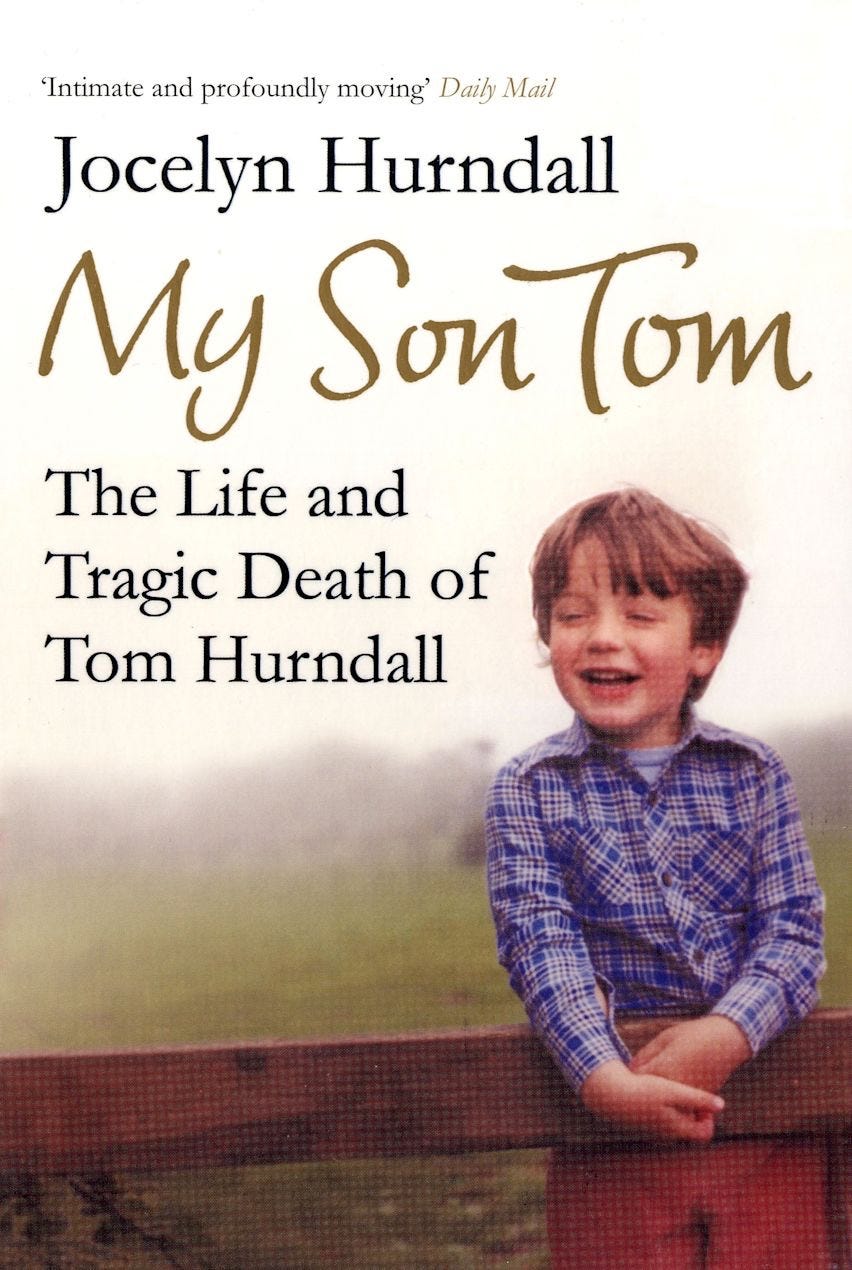
Jocelyn Hurndall is the mother of Tom Hurndall, a British photography student, a volunteer for the International Solidarity Movement, and an activist against the Israeli occupation of the Palestinian territories.
She became known after campaigning for justice following her son’s shooting by an Israeli sniper in Gaza in 2003. Tom Hurndall later died from his injuries in 2004. Jocelyn Hurndall also wrote the book Defy the Stars: The Life and Tragic Death of Tom Hurndall, documenting his life and activism. It covers profound loss, grief, and the struggle for accountability, while also highlighting the realities of life in the Gaza Strip as well as documents the family’s fight to uncover the truth after a cover-up by the Israeli Defence Force (IDF).
His photographs and diaries documenting the Israeli occupation of Palestine were published in a book titled, The Only House Left Standing.
Honorable Mentions
7. My Own Mother
I could never fully comprehend the extent of the hardships my mother endured throughout her life, especially considering that she became a mother to me on her nineteenth birthday. Looking back now as an adult, and especially through the lens of motherhood itself, I realize just how impossibly young she truly was. At nineteen, most people are only beginning to discover who they are, yet she was already carrying the weight and responsibility of raising another human being.
For much of my childhood, I did not know I was mixed with anything else until I was a teenager. By then, I had already spent my most formative years surrounded by my father’s culture that my mother had worked tirelessly to preserve and pass down. Learning later that she had taught herself my father’s language while pregnant with me before I was even born moved me in a way I struggle to describe. I have been with my husband since I was 16, and I still struggle with his native language. It was not something she was obligated to do, nor something expected of her, but an act of love and devotion so deep that she immersed herself entirely into a culture, traditions, and even a syncretic religion that were not originally her own until they became part of her identity too.
She was still practically a child herself, navigating adulthood and motherhood simultaneously, and in many ways my father’s family helped raise her as much as they helped raise me. Yet despite her youth, despite everything unfamiliar and overwhelming that must have surrounded her, she embraced it all with an openness and determination that I deeply admire now. There is something profoundly beautiful about the way she chose love over fear, community over isolation, and understanding over distance.
When I think about mothers throughout history, I think not only of grand acts of sacrifice remembered in books or headlines, but also of quieter, deeply personal acts like hers, the unseen labor of reshaping oneself out of love for one’s children. The willingness to learn a new language, adopt unfamiliar customs, carry traditions that are not your own, and build a bridge between worlds so your child never has to feel disconnected from either side of themselves. Those acts may never be memorialized publicly, but they are no less extraordinary.
8. My Mother-in-Law
My mother-in-law became a mother at an age when most people are still children themselves. She had her first daughter at around fourteen years old, then a second daughter soon after, and finally my husband, the youngest, the baby of the family. When I hear the stories of her early life, I am often struck by how much responsibility was placed on her so early, and how she carried it with a kind of quiet endurance that only becomes fully visible in hindsight.
I have heard fragments of the life she built in those early years, small but haunting details that linger. The tiny house they lived in, the monsoon seasons, when the rain would rise and flood their space, and she would hold my husband as a baby in her arms while climbing to higher surfaces just to keep him safe and dry.
The most painful part of her story, though, is not only what she endured then, but what she has had to endure for decades since. When she made the decision to leave her two daughters behind and come to the United States with my husband, who was then only around two years old, it was not a choice made lightly or without cost. It was a separation born of necessity and hope, and one that would become permanent in ways no one could have fully understood at the time. Due to the long and often broken realities of immigration systems, more than twenty years later she has still not been able to see her daughters in person again. She has also lost her father while being over here.
That absence is a silence that has stretched across most of her adult life. A kind of grief that does not end, but simply learns how to coexist with daily responsibilities. And yet, in the midst of that distance and loss, she continued to build a life here. She taught herself how to read in both Vietnamese and English, refusing to be limited by language or circumstance. She worked tirelessly to support her large family overseas while also raising my husband on her own here, carrying the weight of two worlds at once with relentless determination.
She is, in every sense, a woman who has had to make strength out of necessity. Not the kind of strength that is loud or performative, but the kind that is built in quiet endurance, in sacrifice that spans decades, in love that persists even when it is stretched across borders and time. To me, she is one of the strongest women I know, not because her life was easy to admire from a distance, but because it has been unimaginably hard to live through and she has continued anyway.