


Dance itself is a well-known art form, sport, and form of exercise, but ballet is considered to be the most prestigious dance form to exist, even today, due to the historical ties it has with royal courts and the training necessary to perform such an art. But while ballet is considered prestigious, beautiful, and most aesthetically pleasing to watch, it has much darker undertones intertwined with its history, dancers, and the training dancers endure. So, let’s start at the beginning…
Political Beginning of Ballet
The book, Ballet The Definitive Illustrated History by Vivianna Durante, speaks on the history of ballet since the beginning. Ballet originated roughly around the 15th century in Italian Renaissance courts (otherwise known as ballet de cour*) as a way of entertainment for the wealthy and noble. It was then later brought to France by Catherine de’ Medici in the 16th century after she married the French king, Henri II, in 1533 at the ripe age of 14 (they were both 14 at this time). Catherine, with a love for the arts on her side, brought Italian entertainment to the French Courts in hopes of reasserting the monarchy’s authority, which, at the time, was not highly regarded in the eyes of the people (Durante, 2018).
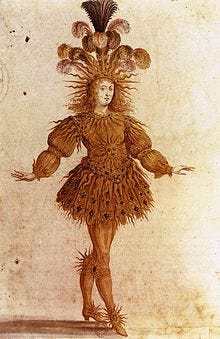
This was done when Italian musician and composer Balthasar de Beauhoyeulx was brought to the French court in 1555 and created Ballet Comique de la Reine in the celebration of Catherine’s daughter-in-law’s, Marguerite de Vaudemont, marriage to the Duke of Joyeuse in 1581. In the ballet de cour style, Ballet Comique de la Reine is credited as the first ballet to combine choreography with a narrative and lasted 5.5 hours (Durante, 2018).
As the ballet de cour style lasted throughout the next few centuries, even more political allegories started coming through the dances, as even royalty started participating in the performances, adding a layer to how the audiences would see their nobility. King Louis XIV appeared in the 12-hour Ballet de la nui as the Sun King–god Apollo; solidifying the god-like comparisons between the nobility in France (Durante, 2018).
Ballerina Pipeline
As most of the world knows, the arts were male dominated. While women still practiced these arts, for example, Catherine de’ Medici was trained in ballet in Italy, during a time where women were known for painting, playing the piano, and singing as hobbies, they were not allowed to perform these arts on the stage. Men played both male and female parts on the stage, oftentimes even dressing up in more ornate gowns when playing a woman. That is, until 1681, when choreographer Pierre Beauchamp choreographed the first ballet to publicly feature female professional dancers Le Triomphe de l’amour (Durante, 2018).
There are two recognized “first” ballerinas. Our first is Henriette-Anne, Princesse d’Angleterre, duchesse d’Orleans, as spoken about by Moira Goff in her blog, “Dance in History”. At the age of 9, Henriette-Anne performed in a ballet de cour in 1654 called “entrée of Les Nopces de Pélée et de Thétis as Erato, at the head of the other Muses” (Goff, 2015).
Our second is the first professional ballerina: Mlle de la Fontaine. Fontaine performed in Beauchamp’s Le Triomphe de l’amour and is cited to be the first ballerina to have publicly performed on a stage in front of an audience outside of court (Goff, 2015).
As we skip through a few years, we start to have more women performing professionally until about the late 17th century and early 18th century when we have more women than men performing ballet professionally, and we see the switch to a female dominated sport. Women were even starting to be admitted into dance academies in the late 17th century (Durante, 2018). This is also around the time when the word “ballerina” (an Italian word for “dancing master”) was first used to describe a professional female dancer (Jacobs, 2013).
The Art of Perfection
For any ballet dancer, they know that anything less than perfection is unacceptable. Even non-dancers know this; as the amount of media portraying this issue is striking. One big example of this is Black Swan (2010) with Natalie Portman portraying ballet dancer Nina Sayers as she navigates the contrasting differences in the two leading roles she is cast in: White Swan and Black Swan. Nina’s own personal struggles to be perfect causes her to have hallucinations and her own fatality as she stabs herself, thinking it’s her understudy, but still performs even after she realizes who she actually stabbed, while bleeding out after her performance, she says: “I felt it. Perfect. I was perfect.”

Perfection is something that the average person knows they can never obtain, but for a ballet dancer, perfection is the only choice many tend to have. You hear of dancers being kicked out of companies for being anything less; berated, beaten down emotionally, and completely broken inside and out as the only thing they can hope to get is the approval of their teachers and to perform in coveted roles. But this is not a new deal; perfection has been wanted since the beginning of the art itself. Laura Jacobs talks about this in her book Celestial Bodies: How to Look at Ballet, in the chapter “Thoughts on Perfection”.
Jacobs speaks on various dancers and critics’ own views on perfection within the world of ballet; all agreeing that the goal of perfection isn’t ideal or achievable as they’ve gone through their careers. Former ballet dancer, Heather Watts (known for her time in the New York City Ballet), states, “Perfection is a moving target. Each day you begin anew, trying for a higher bar every time you go out onstage” (Jacobs, 2018). Which is true, the scope of perfection will always be changing; whether that is from class to stage or from teacher to teacher. In the Australian show Dance Academy, the main character, Tara, was the best dancer in her hometown and was probably perceived as perfect to her teachers, but at the National Dance Academy, she was the least trained and most technically wrong dancer they had accepted.
Eating Disorders
Another form of perfectionism within a dancer shows up through eating disorders, body dysmorphia, and comparisons. This started early on, even before women began performing ballet. In the book Celestial Bodies: How to Look at Ballet by Laura Jacobs, she states that “A shapely or ‘well-turned’ leg was such a source of pride that men with thin calves might fill out their stockings with lamb’s wool” (Jacobs, 2018). The idea to change one’s body for performances isn’t new, just worsened throughout the years. According to the article “The Cult of Thin” by Deirdre Kelly, the amplified fixation on thinness can be attributed to “Balanchine’s preference for long and lean ballerinas” in the 1960s, which then influenced companies worldwide for the slender and thin aesthetic of their dancers.
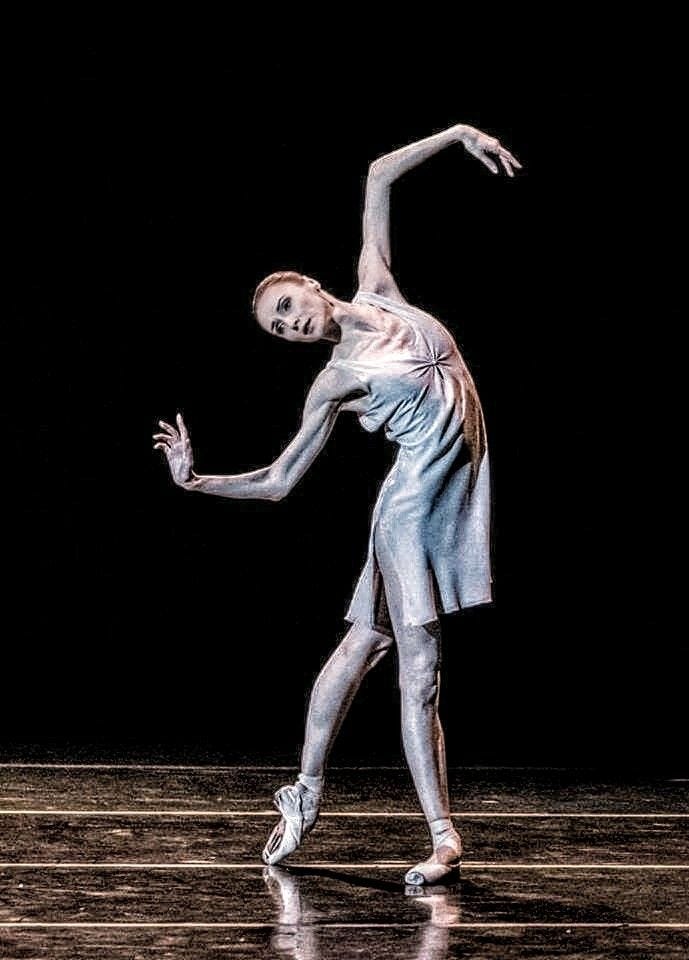
But as we get into the age of technology and social media, we now have the up close and personal photos and videos of the ballet dancers themselves on and off the stage. We have the behind-the-scenes in classes, body checks, “what I eat in a day”, etc., videos that dancers, magazines, Youtube channels, and teachers post to show the world what they’re doing and eating to look the way that they do, or how to prepare for Nutcracker season. Because of this, the world can no longer ignore the glaring problem of eating disorders within the dancers of this art.
Current and past dancers open up about their own body issues and how ballet took its toll on their mental and physical health. In her article, “How I Recovered from My Decade Long Eating Disorder”, Suvi Honkanen speaks on how her relationship with food regressed significantly starting from the age of 14; all from the comment “lose a kilo” by her teacher (2022). In the article “Eating Disorders and the ballet industry: why change needs to occur”, Amelia recalls, “I didn’t want anyone to see me – I had comments about my body from my director and the choreographers who I worked with which made me doubt everything about myself. I was taken out of ballets and told I should never wear a certain leotard because it made me look ‘big’” (2022).
The body expectations in ballet are because of lines and lightness. The shapes a ballet dancer’s lines make, from the top of their fingers to their legs, are meant to be seen from the back of the theatre. Which, to many dance instructors beliefs, pops and can be showcased more the thinner the dancer is. Their legs are completely straight, like a pencil; no curves, no fat, nothing to ruin the lines the choreographer made in 1720 or was “improved” upon in 1960. The lightness needed for the male dancer to lift the girl above his head or to help stay upon point through thirteen pirouette turns in one go.
The End…
Ballet is a gorgeous art to witness, but a dark, twisted, political, and dangerous art to partake in. This does not cover even half of what can happen in the ballet world as so many things are left untold to the media or just rumored around in the ballet world itself. With the dark and political truths of the Bolshoi ballets not even mentioned, and the personal truths unsaid by other ballet dancers, as some secrets are meant to be kept. Ballet, unfortunately, cannot be summed up in one article, but, hopefully, there are more to come.
Edited by Grace Myatt and Lilli Eve
Citations
Aronofsky, Darren, director. Black Swan. Fox Searchlight Pictures, 2010.
Bradbury, Zoe. “Eating Disorders and the Ballet Industry: Why Change Needs to Occur.” Butterfly Foundation, 27 Jan. 2022, butterfly.org.au/eating-disorders-and-the-ballet-industry-why-change-needs-to-occur/.
Durante, Viviana. Ballet: The Definitive Illustrated History. DK, 2018.
Goff, Moira. “Madame. the First Ballerina?” Dance in History, 12 Feb. 2015, danceinhistory.com/2015/02/12/madame-the-first-ballerina/
Honkanen, Suvi. “How I Recovered from My Decade Long Eating Disorder.” Ballet with Isabella, 28 Apr. 2022, balletwithisabella.com/posts/how-i-recovered-from-my-decade-long-eating-disorder/
Jacobs, Laura. “Defining ‘Ballerina.’” Pointe Magazine, 20 Nov. 2013, pointemagazine.com/who-is-a-ballerina/#gsc.tab=0
Jacobs, Laura. “Thoughts on Perfection.” Celestial Bodies: How to Look at Ballet, Basic Books, New York, New York, 2018, pp. 119–126.
Kelly, Deirdre. “The Cult of Thin.” Dance Magazine, 29 June 2016, dancemagazine.com/the-cult-of-thin/.
Samantha Strauss and Joanna Werner, creators. Dance Academy. Werner Film Productions, ZDF Enterprises, and ACTF, 2010.
